How to reset your habits in 30 days without starting over again: pick one keystone habit, remove the friction, and build a routine that lasts.

Habit Reset: How to Reset Your Habits in 30 Days (And Actually Make Them Stick)
The science-backed habit reset method that works
You’ve started over so many times you’ve lost count. Every habit reset attempt begins with hope — Monday morning, New Year’s Day, the first of the month. Every time, you tell yourself “this time will be different.” But by day 14, you’re back where you started. The problem isn’t you. The problem is that most habit reset advice is designed to fail.
Why Your Habit Reset Fails Every Time
Most people think habit reset attempts fail because of lack of willpower or discipline. That’s not it.
Habit reset failures happen because of decision fatigue.
Every time you have to decide what to eat, when to exercise, or how much is “enough,” you’re spending cognitive energy you don’t have. By day 14 of your habit reset, you’re exhausted from making the same decisions over and over.
The solution isn’t more motivation. It’s removing decisions entirely.
Research on decision fatigue from the American Psychological Association shows that every decision we make depletes our mental resources. This is why creating a structured habit reset system that eliminates unnecessary choices is crucial for lasting change.
The Science Behind a Successful Habit Reset
Research published in the European Journal of Social Psychology shows that habit formation takes an average of 66 days — not 21 like the popular myth suggests.
But here’s the critical part for any habit reset: most people quit on day 14.
Why day 14? Because that’s when the initial motivation wears off but your habit reset hasn’t become automatic yet. You’re in the hardest part of the curve.
What Happens During Your Habit Reset Timeline:
Days 1-7: High motivation, high effort. You’re consciously thinking about every action in your habit reset.
Days 8-21: Motivation drops, effort is still high. This is where most habit reset attempts fail.
Days 22-40: Effort starts decreasing as neural pathways strengthen. Your habit reset is taking hold.
Days 41-66: The behavior becomes automatic. Your habit reset is complete.
According to neuroscience research on habit formation, the goal of any habit reset is to survive the middle section (days 8-21) with as little effort as possible. This is exactly why the Fresh Start 30 program is structured around a 30-day framework with built-in support during the danger zone.
The 3 Rules for a Successful Habit Reset
Rule 1: Same Time, Every Time During Your Habit Reset
Your body operates on circadian rhythms. When you eat, sleep, or exercise at inconsistent times during your habit reset, your body can’t predict what’s coming next.
The fix for your habit reset: Do the same thing at the same time every day for 30 days.
- Same wake time (±15 minutes)
- Same meal times (±30 minutes)
- Same movement windows (morning walk, evening walk)
Your body adapts to this rhythm within 5-7 days. Research from the National Institute of General Medical Sciences on circadian rhythms shows that once it does, you’ll naturally feel hungry at meal times and tired at bedtime. The habit becomes easier because your biology is working with you, not against you.
This is why our 30-day meal plan emphasizes consistent meal timing — it aligns with your body’s natural biological clock rather than fighting against it.
Rule 2: Remove All Optional Decisions
Decision fatigue is real. Every choice you make drains your willpower tank.
Examples of unnecessary decisions:
- “What should I eat for breakfast?”
- “Should I work out today?”
- “Is this portion size right?”
- “Am I doing this correctly?”
The fix: Pre-decide everything.
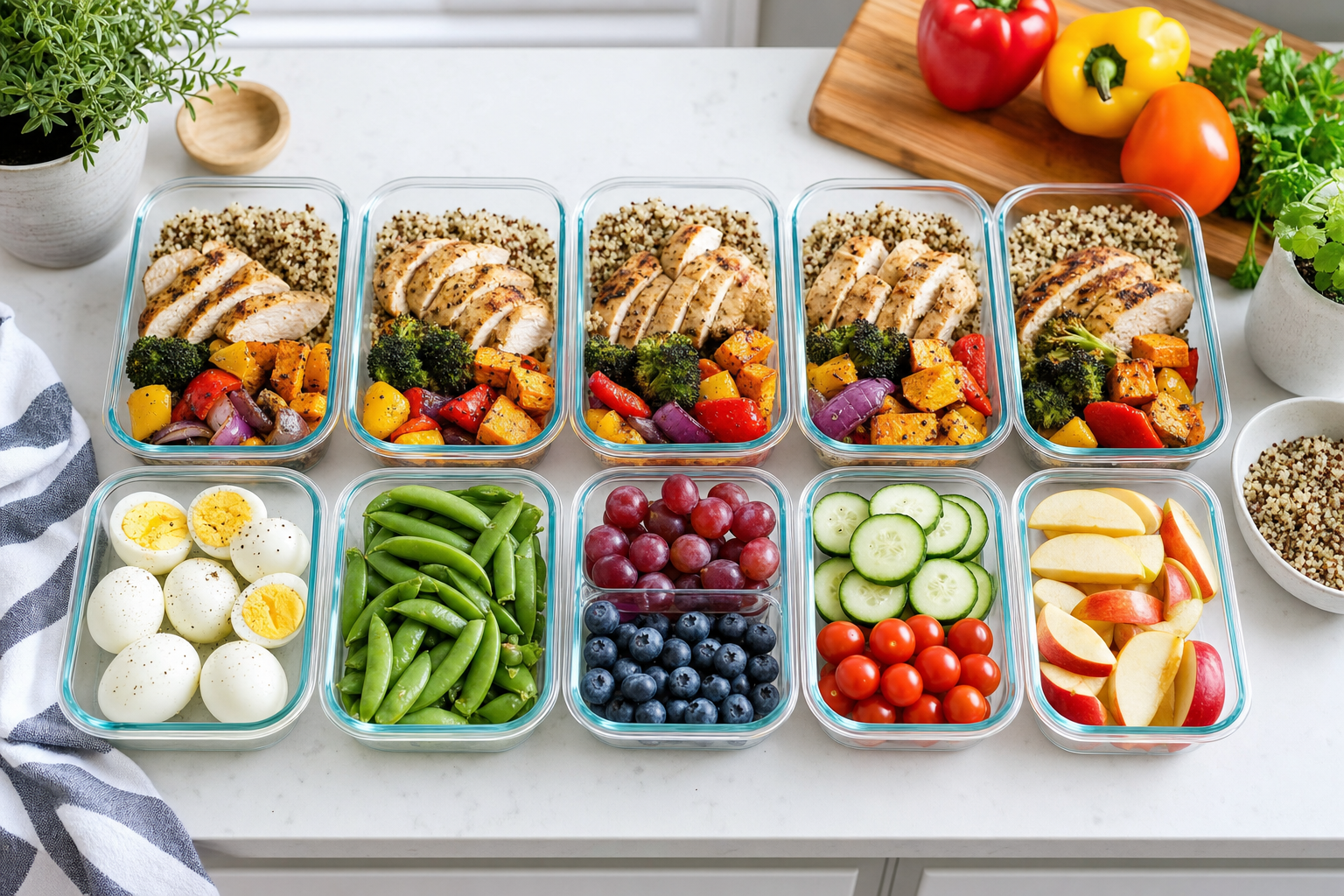
If you’re resetting your nutrition habits, eat the same breakfast for 30 days. Same lunch structure. Same dinner template. No variety. No “should I eat this or that?”
Sounds boring? That’s the point. Boredom means your brain isn’t burning energy on decisions.
Rule 3: Build Fallback Protocols
Life happens. You’ll miss a meal. You’ll have a bad day. You’ll travel.
Most people treat one imperfect day as total failure and quit. This is why you need fallback protocols — simplified versions of your habit for when life gets chaotic.
Example fallback protocols:
- Missed breakfast? Eat it as soon as you can. Don’t skip to lunch.
- Can’t cook dinner? Rotisserie chicken + bagged salad counts.
- No time for 60-minute walk? 20 minutes is better than zero.
The goal isn’t perfection. The goal is consistency despite imperfection.
The 30-Day Habit Reset Framework
Here’s a proven structure for any successful habit reset:
Week 1: Simplify Your Inputs
Remove complexity. Strip your habit reset down to the absolute minimum required actions.
If you’re resetting nutrition: whole foods, consistent meal times, adequate protein. That’s it. No tracking macros. No calorie counting. No food rules.
If you’re resetting movement: daily walks at the same time. No intensity. No variety. Just consistency.
The goal: Establish the rhythm without overwhelming yourself.
Learn more about our approach to metabolic reset without calorie restriction.
Week 2: Build the Rhythm
This is the danger zone. Motivation is fading. The habit isn’t automatic yet.
What to expect: You won’t want to do it. You’ll rationalize skipping. You’ll question if it’s working.
What to do: Follow the structure anyway. Don’t negotiate with yourself. The rhythm is more important than how you feel.
Week 3: Strengthen the Structure
Test the system. See what throws you off.
Did you skip your afternoon meal because you “weren’t hungry”? Did you miss your morning walk because you “didn’t have time”?
Identify the gaps. Build contingency plans. Tighten the structure.
Week 4: Prove It to Yourself
By day 30, the habit should feel normal. Not easy — just normal.
You’re not relying on motivation anymore. You’re just doing what you do. The behavior has become part of your identity.
How to Know If Your Habit Reset Is Working
Good signs your habit reset is succeeding:
- You stop thinking about the habit constantly
- Hunger syncs to your meal times
- Energy stabilizes throughout the day
- You feel weird when you miss the habit
- You don’t need reminders or willpower
Bad signs your habit reset needs adjustment:
- You’re still negotiating with yourself daily
- Every action feels effortful
- You’re counting down to “when this is over”
- You have no contingency plans for imperfect days
If you’re seeing bad signs on day 21, your structure is too complex. Simplify further.
The Biggest Habit Reset Mistake People Make
They try to reset everything at once.
New diet. New workout plan. New sleep schedule. New morning routine.
Your brain can’t handle that much change simultaneously. You’ll burn out.
The fix: Reset one system at a time.
Start with nutrition (biggest impact on energy and hormones). Give it 30 days. Once it’s automatic, add movement. Give that 30 days. Then add sleep optimization.
Sequential resets compound. Simultaneous resets collapse.
Research from behavioral psychology studies confirms that focusing on one behavior change at a time leads to significantly higher success rates than attempting multiple changes simultaneously.
Real-World Application: The Fresh Start 30 Habit Reset System
This is exactly how Fresh Start 30 works.
It’s a 30-day structured habit reset designed to remove guesswork and decision fatigue:
- Same meal structure every day (no deciding what to eat)
- Same movement windows (no deciding when to exercise)
- Pre-made decisions for portions (no guessing if it’s “enough”)
- Fallback protocols built in (for when life gets chaotic)
The system is designed to survive the day 8-21 danger zone by making consistency effortless.
Three ways to use it:
- The Book — Understand the framework and psychology first
- The 30-Day Meal Plan — Get done-for-you meal structure and recipes
- The 6-Week Course — Guided support with weekly coaching and community
All three use the same 30-day habit reset framework. You choose based on how much structure and support you need.
Start Your Habit Reset Today
Stop relying on motivation. Start building structure.
Pick one habit to reset. Build a 30-day plan with these elements:
- Same time every day (when will you do this?)
- Zero optional decisions (what will you pre-decide?)
- Fallback protocol (what’s the minimum version when life gets chaotic?)
Then commit to 30 days. Not 7. Not 14. Thirty.
If you want a proven structure instead of building one from scratch, learn how Fresh Start 30 works.
The goal isn’t intensity. The goal is repeatability.


Build Your Next Healthy Habit
Compare FreshStart30 plans for meal planning, daily routines and member resources. Choose the support that fits your needs.

David Knox Vale
David Knox Vale created FreshStart30 to share practical meal planning, walking and daily routines. He reports losing 48 pounds over three months. This is his personal account, not an independently verified program result or a promise of what others will achieve. FreshStart30 provides general wellness education, not medical treatment.