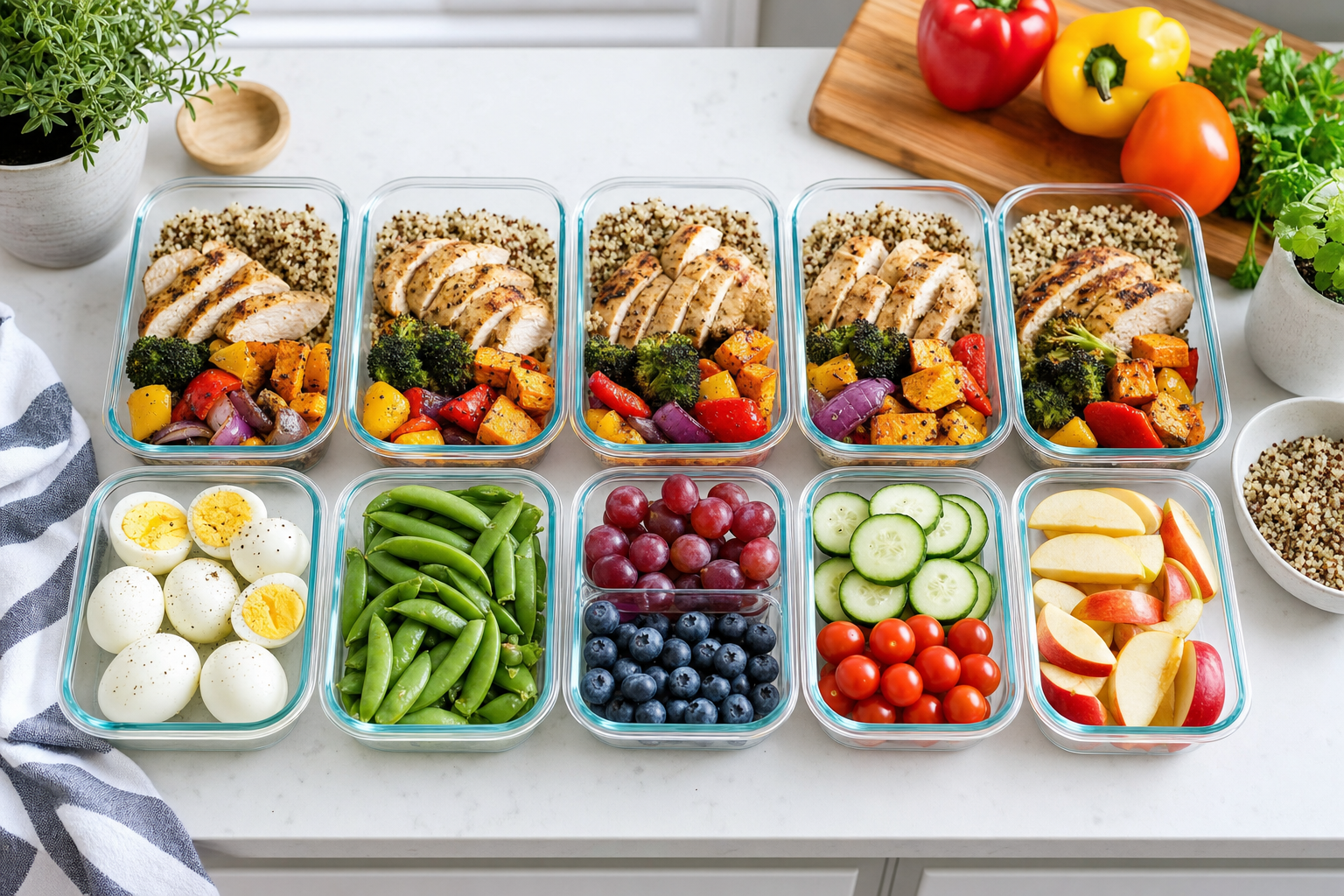
How to support your metabolism after 30: protein, muscle, sleep, stress, and meal structure — practical shifts that help restore steady fat loss.

How to Fix Metabolism After 30: Evidence-Based Strategies That Actually Work
Your metabolism isn’t broken. It’s adapted. Here’s how to fix it.
If you’re wondering how to fix metabolism after 30, you’re not alone. After years of yo-yo dieting, inconsistent eating, chronic stress, and hormonal changes, your body has downregulated its metabolic rate to protect you from what it perceives as food scarcity.
The good news? You can fix your metabolism after 30. But not with more restriction or more exercise.
What “Fixing Your Metabolism After 30” Actually Means
Metabolic damage isn’t real in the clinical sense. Your metabolism hasn’t permanently broken.
What’s actually happened:
- Adaptive thermogenesis — Your body lowered its metabolic rate to match your calorie intake (study on metabolic adaptation)
- Hormonal downregulation — Thyroid hormones decreased, leptin dropped, ghrelin increased (hormonal changes during calorie restriction)
- Mitochondrial dysfunction — Your cells became less efficient at producing energy
- Insulin resistance — Your cells require more insulin to process glucose
All of these are reversible. Learning how to fix metabolism after 30 requires a different approach than what caused the problem in the first place.
The 5 Ways to Fix Metabolism After 30
FIX #1
Reverse Diet to Reset Baseline
The Problem
You’ve been eating 1,200-1,500 calories for months or years. Your body adapted by lowering its metabolic rate to match.
The Solution
Gradually increase calories to restore normal metabolic function through reverse dieting.
How to Implement:
Phase 1 (Weeks 1-4):
- Add 100-200 calories per day
- Focus on protein and healthy fats
- Monitor weight and energy weekly
- Expect slight weight gain initially (this is normal)
Phase 2 (Weeks 5-8):
- Add another 100-200 calories
- Energy should improve, cravings should reduce
- Weight may stabilize or continue slight increase
Phase 3 (Weeks 9-12):
- Continue adding until you reach maintenance (typically 1,800-2,200 for women, 2,200-2,800 for men)
- Metabolism should be restored to normal function
Why it works: Your body needs proof that food is abundant before it will increase metabolic rate. Gradual increases signal safety.
Expected timeline: 12-16 weeks to fully reset baseline metabolism.
FIX #2
Prioritize Protein (Seriously)
The Problem
Most people eat 50-70g protein daily. This is barely enough to maintain muscle mass, let alone optimize metabolism.
The Solution
Increase protein to 1g per pound of target body weight.
Why Protein Matters for Metabolism:
- Highest thermic effect of all macros (30% of protein calories burned in digestion)
- Preserves lean muscle mass during fat loss (research on protein and muscle retention)
- Increases satiety (reduces total calorie intake naturally)
- Supports thyroid function and hormone production
How to Implement:
- Women: 120-140g daily
- Men: 140-180g daily
- Distribute evenly across 4 meals (30-45g per meal)
- Prioritize quality: grass-fed meat, wild fish, pasture-raised eggs
Expected results: Within 2 weeks, energy improves, cravings reduce, muscle definition increases.
FIX #3
Strategic Meal Timing (Not Intermittent Fasting)
The Problem
Intermittent fasting or skipping meals signals food scarcity to your body. After 30, this often backfires by raising cortisol and lowering metabolic rate.
The Solution
Eat at consistent times daily to regulate circadian metabolic rhythms.
Why Meal Timing Matters:
- Regulates cortisol patterns (prevents stress-induced fat storage)
- Optimizes insulin sensitivity (when you eat affects how insulin responds)
- Supports thyroid function (irregular eating suppresses T3 conversion)
- Prevents metabolic adaptation (your body knows when to expect fuel)
How to Implement:
- Eat within the same 30-minute window daily
- Never skip meals (especially breakfast)
- 4 meals per day (breakfast, lunch, snack, dinner)
- 12-hour overnight fast (example: 7 PM to 7 AM)
Expected results: Energy becomes consistent, hunger syncs to meal times, fat loss occurs without reducing calories.
Related: Get the Fresh Start 30 Meal Plan with pre-timed meals for optimal metabolic function.
FIX #4
Reduce Chronic Stress (The Cortisol Fix)
The Problem
Chronic elevated cortisol suppresses thyroid function, increases insulin resistance, and promotes visceral fat storage (Mayo Clinic on chronic stress).
The Solution
Active stress management, not just “try to relax.”
Why Cortisol Wrecks Metabolism:
- Blocks T4 to T3 conversion (active thyroid hormone)
- Increases blood sugar and insulin resistance
- Breaks down muscle tissue for glucose
- Promotes belly fat storage specifically (cortisol and abdominal fat research)
How to Implement:
Daily Practices:
- 30-minute morning walk (fasted, low intensity)
- 10 minutes breathwork or meditation
- 30-minute evening walk (post-dinner)
- No intense exercise after 6 PM
Weekly Practices:
- One complete rest day (no structured exercise)
- Activities you enjoy (not for calories burned)
- Social connection (reduces cortisol naturally)
Sleep Optimization:
- 7-9 hours nightly (sleep hygiene guidelines)
- Same sleep/wake times (±30 min)
- Cool, dark room
Expected results: Cortisol normalizes within 2-3 weeks. Stubborn belly fat starts moving. Energy stabilizes.
FIX #5
Strategic Movement (Not More Cardio)
The Problem
Excessive cardio after 30 increases cortisol, breaks down muscle, and creates metabolic adaptation.
The Solution
Low-intensity movement + strategic strength training.
Why This Works:
- Walking doesn’t elevate cortisol
- Strength training builds muscle (increases resting metabolic rate)
- Recovery between sessions prevents overtraining
- Sustainable long-term (unlike intense daily workouts)
How to Implement:
Daily:
- 60 minutes total walking (split into 2x 30-minute sessions)
- Morning: fasted walk (targets visceral fat)
- Evening: post-dinner walk (aids digestion, reduces stress)
2-3x Per Week:
- Strength training (30-45 minutes)
- Focus on compound movements (squats, deadlifts, presses)
- Progressive overload (gradually increase weight)
- Full recovery between sessions (48-72 hours)
Expected results: Muscle mass increases, resting metabolic rate increases, body composition improves without extreme effort.
How Long Does It Take to Fix Metabolism After 30?
Weeks 1-2: Foundation
- Energy still low (your body doesn’t trust you yet)
- Weight may increase slightly (water retention as you increase food)
- Cravings are still present
- Sleep may improve
Weeks 3-4: Adaptation
- Energy starts improving
- Cravings begin reducing
- Digestion normalizes
- Mood stabilizes
Weeks 5-8: Momentum
- Energy is noticeably better
- Weight begins moving (fat loss visible)
- Strength increasing
- Sleep quality excellent
Weeks 9-12: Restoration
- Metabolism fully restored to normal function
- Body composition visibly improved
- Energy high and stable
- Can eat more food without gaining weight
This takes 12-16 weeks minimum. Anyone promising faster metabolic reset is lying.
What NOT to Do
❌ Don’t Cut Calories Lower
If you’re already eating 1,200-1,500 calories and not losing weight, eating less will only worsen metabolic adaptation.
Do this instead: Reverse diet up to maintenance, then create a small deficit (200-300 calories) from the higher baseline.
❌ Don’t Add More Cardio
If you’re already doing cardio 5-6 days per week and not seeing results, more cardio will increase cortisol and slow metabolism further.
Do this instead: Reduce to 2-3 days of low-intensity walking. Add strength training.
❌ Don’t Try Extreme Diets
Keto, carnivore, vegan, Whole30 — these might work temporarily, but they don’t fix the underlying metabolic dysfunction.
Do this instead: Focus on meal timing, protein optimization, and stress reduction first. Diet composition matters less than these foundational elements.
❌ Don’t Skip Meals to “Save Calories”
Skipping meals raises cortisol, lowers metabolic rate, and creates binge-restrict patterns.
Do this instead: Eat 4 consistent meals daily at the same times.
How to Fix Metabolism After 30: Gender-Specific Considerations
For Women Ages 30-50:
Your metabolic challenges are compounded by hormonal shifts:
- Progesterone declines faster than estrogen
- Estrogen dominance increases fat storage
- Perimenopause creates metabolic resistance
Additional Strategies:
- Cycle-aware eating (adjust carbs based on menstrual phase)
- Higher protein (140g daily minimum)
- Strategic fiber intake (helps metabolize excess estrogen)
- Stress management critical (cortisol is your biggest enemy)
For Men Ages 30+:
Testosterone decline creates its own metabolic issues:
- Visceral fat increases (which lowers testosterone further)
- Muscle mass decreases
- Energy and recovery slow
Additional Strategies:
- Focus on visceral fat reduction (walking is most effective)
- Protein even higher (160-180g daily)
- Sleep optimization critical (testosterone produced during deep sleep)
- Strategic strength training (2-3x week, no more)
Real Results: How to Fix Metabolism After 30 in Action
Lisa, age 42
Starting Point:
Eating 1,300 calories daily Cardio 6x per week Weight stuck for 8 months Energy: 3/10 Constantly hungry and cold
What She Changed:
Month 1:
- Increased to 1,600 calories (added protein and fats)
- Reduced cardio to 3x per week walking
- Added 2x strength training
- Consistent meal times
Month 2:
- Increased to 1,900 calories
- Weight stable, energy improving
- Cravings reduced significantly
- Sleep quality improved
Month 3:
- Stabilized at 2,100 calories
- Lost 8 lbs from month 1 starting weight
- Energy: 8/10
- No longer cold or hungry
- Sleeping great
“I was scared to eat more. I thought I’d gain weight. But eating more actually fixed my metabolism. Now I eat 800 calories more than before and weigh less.”
The 30-Day Plan to Fix Metabolism After 30
The fastest way to fix metabolism after 30 is through a structured 30-day reset.
What to focus on for 30 days:
- Consistent meal timing (4 meals, same times daily)
- Protein optimization (120-150g daily, 30-40g per meal)
- Strategic movement (60 min walking, 2-3x strength training)
- Stress reduction (meditation, breathwork, sleep optimization)
- Anti-inflammatory foods (remove seed oils, refined sugar)
Expected 30-day results:
- Energy restored
- Cravings eliminated
- Sleep improved
- Initial fat loss (5-10 lbs)
- Metabolic rate increasing
After 30 days: Continue for another 60-90 days to fully restore metabolic function.
Ready-Made Solution: Fresh Start 30
Building a metabolic reset plan from scratch requires knowledge of meal timing, macronutrient optimization, training protocols, and stress management.
Fresh Start 30 is designed specifically to reset metabolism in people over 30.
It addresses all 5 metabolic fixes simultaneously:
- Reverse diet protocol built in
- Protein-optimized meal structure
- Consistent meal timing framework
- Stress management strategies
- Strategic movement plan
Three ways to use it:
The Book
Understand the science and build your own version
The 30-Day Meal Plan
Get done-for-you meal structure with correct macros
The 6-Week Course
Guided transformation with coaching support
Gender-specific protocols:
Hormone Reset for Women — Optimizes female hormone metabolism
Testosterone Reset for Men — Supports natural testosterone optimization
Your Action Plan
- Stop restricting calories — If you’re eating <1,600 calories, start reverse dieting
- Increase protein — Aim for 120-150g daily
- Establish meal timing — 4 meals, same times, every day
- Reduce stress — Daily walks, meditation, sleep optimization
- Add strength training — 2-3x per week, not more
Commit to 12 weeks minimum. Learning how to fix metabolism after 30 doesn’t happen overnight, but you’ll see significant improvement by then.
If you want a structured system instead of figuring it out yourself, start with Fresh Start 30.
Ready to Fix Your Metabolism After 30?
If you want a structured system for how to fix metabolism after 30 instead of figuring it out yourself, Fresh Start 30 is designed specifically to reset metabolism in people over 30.
Your metabolism isn’t broken. It’s just adapted. Time to reset it.


Build Your Next Healthy Habit
Compare FreshStart30 plans for meal planning, daily routines and member resources. Choose the support that fits your needs.

David Knox Vale
David Knox Vale created FreshStart30 to share practical meal planning, walking and daily routines. He reports losing 48 pounds over three months. This is his personal account, not an independently verified program result or a promise of what others will achieve. FreshStart30 provides general wellness education, not medical treatment.