Discover how meal prep for weight loss after 30 works differently — and better. The FreshStart30 formula for busy adults: proteins, produce, smart carbs, and a 90-minute weekly routine.

Meal Prep for Weight Loss After 30: The FreshStart30 Weekly System
Meal prep for weight loss after 30 is one of the highest-leverage habits you can build — not because it saves time (though it does), but because it removes the daily decisions that derail even the most motivated adults. At FreshStart30, we designed our entire 30-day metabolic reset around this principle: when the right food is already in your fridge, you don’t have to rely on willpower at 6pm on a Tuesday. FreshStart30 founder David Knox Vale used structured weekly meal prep as a core pillar of the framework that helped him lose 48 pounds in 90 days.
Pricing, plan tiers, and program inclusions are accurate as of publication and may change. Individual results vary. Statements have not been evaluated by the FDA. FreshStart30 is not intended to diagnose, treat, cure, or prevent any disease.
Most adults over 30 don’t fail at weight loss because they lack motivation. They fail because their environment isn’t set up to support the choices they want to make. Meal prep changes the environment. The sections below walk through exactly how to build a weekly prep system that supports fat loss, steady energy, and fewer cravings — without turning your kitchen into a full-time job.
Why Meal Prep Works Better After 30 Than Starting Another Diet
After 30, the metabolic landscape shifts. Research from the Cleveland Clinic confirms that metabolism slows with age, and hormonal changes — including shifts in insulin sensitivity, cortisol regulation, and (for women) estrogen — make the body more reactive to inconsistent eating patterns. Skipping meals, eating late, or relying on processed convenience food hits harder after 30 than it did at 22.
Diets that worked in your 20s — aggressive calorie cuts, skipping breakfast, eliminating entire food groups — tend to backfire after 30 because they spike cortisol, disrupt blood sugar, and trigger the body’s conservation response. Meal prep sidesteps all of that. When balanced, protein-rich meals are ready to go, your body gets consistent fuel, blood sugar stays steadier, and cravings drop naturally — without white-knuckling through hunger.
This is why meal prep is a cornerstone of the FreshStart30 30-day metabolic reset, not an optional add-on. It’s the infrastructure that makes every other habit easier.
The FreshStart30 Meal Prep Formula for Fat Loss, Energy, and Fewer Cravings
At FreshStart30, our meal prep formula is built around four non-negotiables: adequate protein at every meal, anti-inflammatory produce, smart carbohydrates timed around activity, and flavor systems that make healthy food something you actually want to eat. This isn’t about perfection — it’s about building a repeatable weekly structure that your body and schedule can both sustain.
The formula works because it addresses the three biggest drivers of weight gain after 30: blood sugar instability, chronic low-grade inflammation, and decision fatigue. Harvard Health notes that an anti-inflammatory dietary pattern — emphasizing vegetables, lean proteins, healthy fats, and whole grains — is associated with better metabolic outcomes and reduced chronic disease risk. That’s the nutritional backbone of everything we build at FreshStart30.
What to Prep Each Week: Proteins, Produce, Smart Carbs, and Flavor Boosters
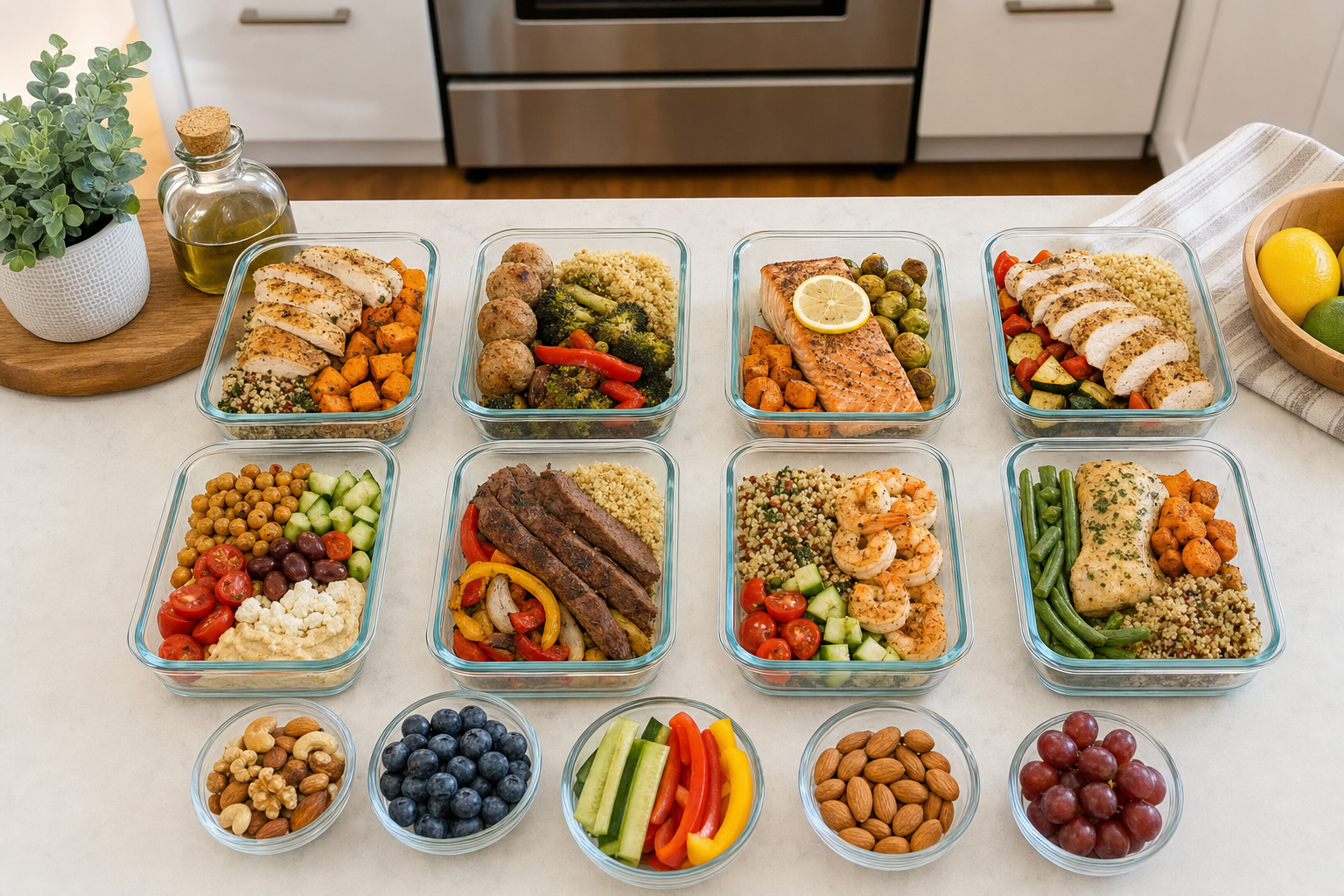
Effective meal prep doesn’t mean cooking 21 separate meals. It means prepping components that mix and match across the week. Here’s the FreshStart30 weekly prep framework:
- Proteins (2–3 options): Baked or grilled chicken thighs or breasts, hard-boiled eggs, canned or poached salmon, cooked ground turkey, or a batch of lentils for plant-based days. Cook in bulk — these form the base of lunches and dinners all week.
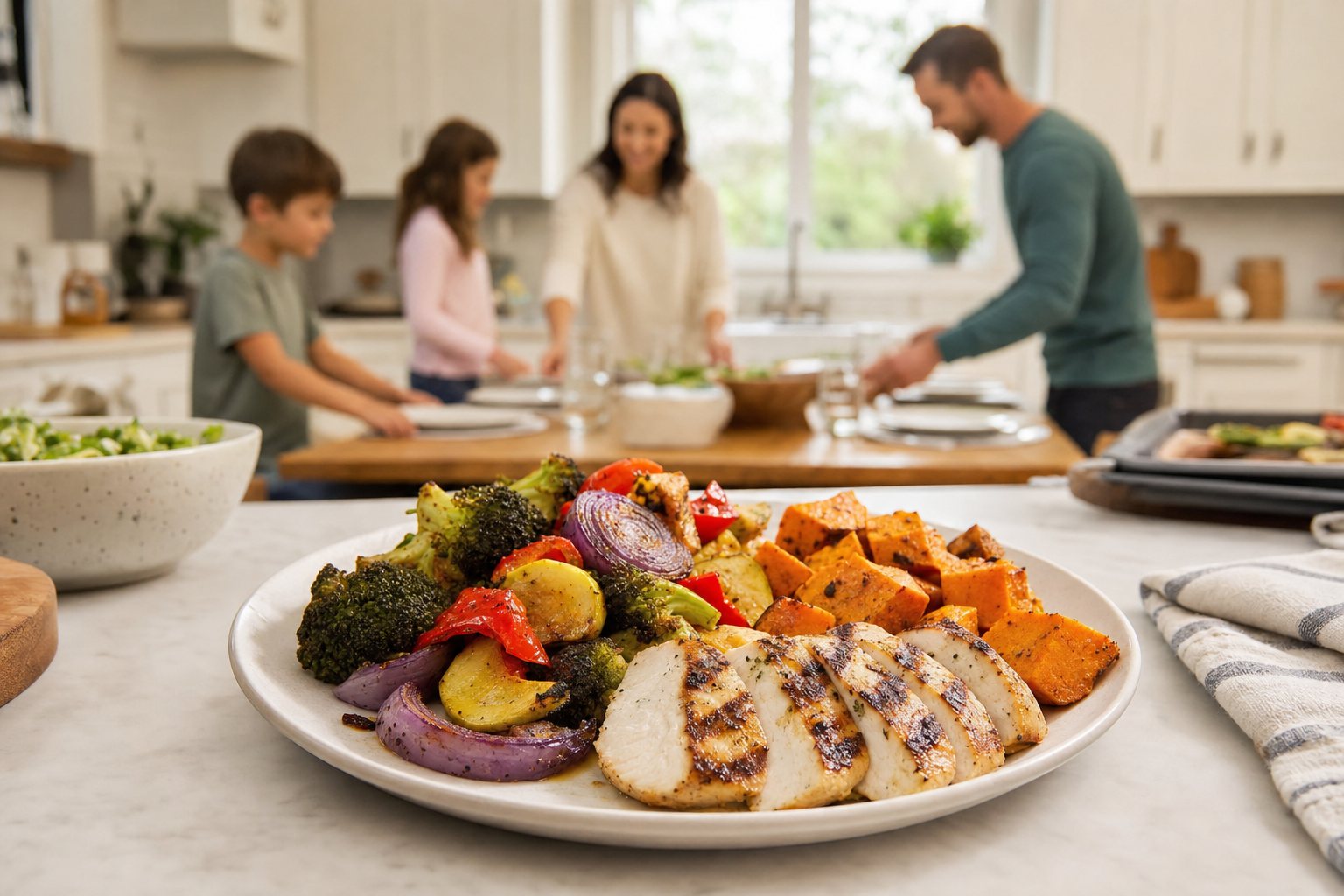
- Produce (roasted + raw): Roast one sheet pan of vegetables (broccoli, zucchini, bell peppers, sweet potato) and wash/chop raw vegetables (cucumber, carrots, celery, leafy greens) for salads and snacks. Variety matters for micronutrient density.
- Smart Carbs: A pot of brown rice, quinoa, or farro. Cooked sweet potatoes. These provide sustained energy without the blood sugar spike of refined carbs.
- Flavor Boosters: A simple tahini dressing, a batch of salsa, or a herb-forward vinaigrette. Flavor is what makes you reach for the prepped food instead of ordering takeout. The FreshStart30 cookbook includes over 100 anti-inflammatory recipes with built-in flavor systems.
A 90-Minute Meal Prep Routine for Busy Parents and Professionals
The most common objection to meal prep is time. Here’s the reality: a well-organized 90-minute session on Sunday (or any day that works for your schedule) can cover the majority of your week’s food. The key is parallel cooking — running multiple things at once rather than cooking sequentially.
- Minutes 0–10: Preheat oven, fill a pot of water for grains, pull proteins from the fridge to come to room temperature.
- Minutes 10–30: Season and load proteins into the oven or onto the stovetop. Start grains on the stove. Chop all vegetables while things cook.
- Minutes 30–60: Roast vegetables on a second sheet pan. Flip proteins. Prep raw vegetables and store in containers. Make one sauce or dressing.
- Minutes 60–90: Cool everything, portion into containers, label with day/meal, refrigerate or freeze as needed.
That’s it. Four categories of food, cooked in parallel, stored in clear containers. The CDC’s nutrition guidance consistently emphasizes that home-prepared meals are associated with better dietary quality and portion control — and 90 minutes once a week is a realistic investment for most busy adults.
Easy Breakfast, Lunch, Dinner, and Snack Ideas You Can Mix and Match
Once your components are prepped, meals come together in under five minutes. Here are examples using the prep framework above:
- Breakfast: Two hard-boiled eggs + sliced cucumber + a small handful of berries. Or: overnight oats with a scoop of Greek yogurt and a tablespoon of almond butter.
- Lunch: Leafy greens + roasted chicken + roasted vegetables + quinoa + tahini dressing. Assembled in two minutes from prepped components.
- Dinner: Ground turkey stir-fried with prepped vegetables + brown rice + salsa. Or: salmon over roasted sweet potato with a side of steamed broccoli.
- Snacks: Carrots and celery with hummus. A hard-boiled egg. A small portion of mixed nuts. Greek yogurt with cinnamon.
The goal isn’t to eat the same thing every day — it’s to have enough variety in your prepped components that you can rotate combinations and avoid food boredom, which is one of the top reasons people abandon healthy eating patterns mid-week.
How to Build a Weight-Loss Plate Without Counting Every Calorie
Calorie counting is one of the most common tools adults over 30 reach for — and one of the least sustainable. It creates a stressful relationship with food, ignores food quality entirely, and doesn’t account for how different foods affect hormones, hunger, and energy. The FreshStart30 plate method is simpler and more effective for long-term results:
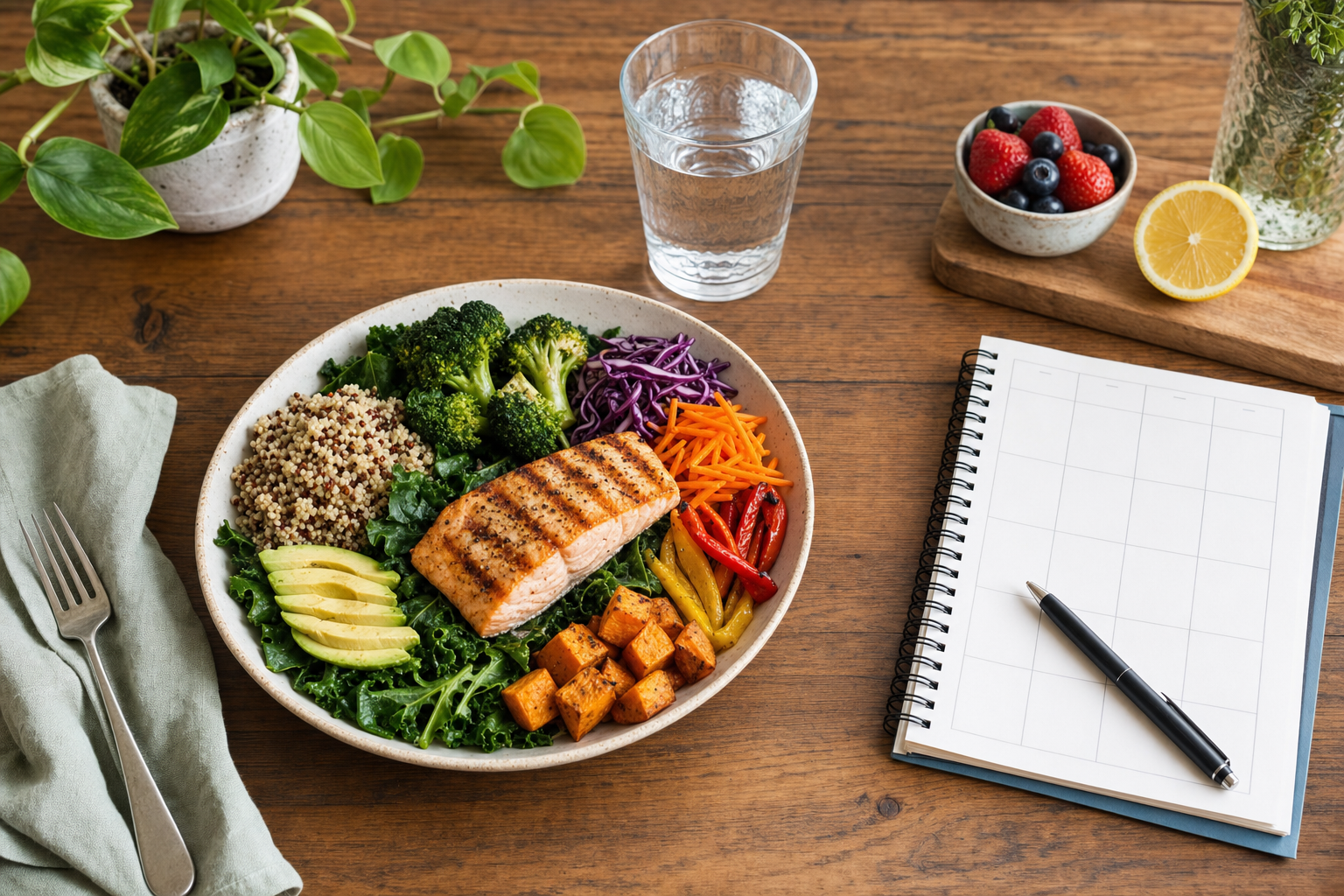
- Half the plate: Non-starchy vegetables (leafy greens, broccoli, zucchini, peppers, cucumber)
- Quarter of the plate: Lean protein (chicken, fish, eggs, legumes, turkey)
- Quarter of the plate: Smart carbohydrates (brown rice, quinoa, sweet potato, farro)
- A thumb-sized portion: Healthy fat (olive oil in the dressing, avocado, a small handful of nuts)
This structure naturally manages portions, stabilizes blood sugar, and delivers the fiber, protein, and micronutrients your metabolism needs after 30 — without a single calorie logged. Mayo Clinic’s research on metabolism supports the importance of protein and fiber-rich meals for supporting metabolic rate and satiety. The FreshStart30 system includes a complete visual plate guide, shopping lists, and 30 days of structured meal plans built around this exact framework.
The Biggest Meal Prep Mistakes That Backfire After 30
Even well-intentioned meal prep can go sideways. Here are the most common mistakes adults over 30 make — and how to avoid them:
- Prepping too much variety at once. Cooking 10 different recipes on Sunday leads to burnout. Stick to 2–3 proteins and 2–3 vegetable options per week.
- Skipping protein at breakfast. A carb-heavy breakfast (toast, cereal, fruit alone) sets up a blood sugar roller coaster that drives cravings by mid-morning. Anchor breakfast with protein.
- Relying on willpower instead of environment. If the prepped food isn’t visible and accessible, you won’t reach for it. Use clear containers at eye level in the fridge.
- Expecting overnight results. Metabolic change after 30 is real but takes time. Habits become more automatic around day 17–21 — quitting before then means you never reach the point where it feels easy.
- Comparing your results to people in their 20s. Hormonal context is different. The FreshStart30 framework is built specifically for adults 30+, not adapted from a generic plan designed for younger bodies.
- Ignoring sleep and stress. Poor sleep and chronic stress elevate cortisol, which directly drives fat storage — especially around the midsection. Meal prep supports metabolic health, but it works best alongside adequate sleep and stress management.
- Jumping to supplements instead of food structure. No supplement replaces a consistent, protein-anchored, anti-inflammatory eating pattern. Build the food foundation first.
A 3-Day Sample Meal Prep Plan to Get Started This Week
Here’s a simple 3-day structure using the FreshStart30 plate method and the component-prep approach above. Use this as a starting point — the full 30-day meal plan inside FreshStart30 expands this into a complete monthly system with shopping lists and recipe variations.
| Day | Breakfast | Lunch | Dinner | Snack |
|---|---|---|---|---|
| Day 1 | 2 eggs + sautéed spinach + berries | Grilled chicken + quinoa + roasted broccoli + tahini | Ground turkey + brown rice + roasted peppers + salsa | Carrots + hummus |
| Day 2 | Greek yogurt + mixed berries + almond butter | Salmon + leafy greens + sweet potato + vinaigrette | Baked chicken thigh + roasted zucchini + farro | Hard-boiled egg + cucumber slices |
| Day 3 | Overnight oats + chia seeds + walnuts | Lentil bowl + roasted vegetables + brown rice + lemon dressing | Turkey + roasted sweet potato + steamed broccoli | Mixed nuts + apple slices |
All of the proteins, grains, and roasted vegetables in this plan can be prepped in a single 90-minute session. The breakfasts take under five minutes to assemble. This is what sustainable weight loss after 30 actually looks like — not a 1,200-calorie crash diet, but a structured, repeatable system that your body and your schedule can both support long-term.
Frequently Asked Questions
How is meal prep for weight loss after 30 different from general meal prep?
After 30, metabolism slows, insulin sensitivity can decline, and hormonal shifts make blood sugar stability more important. Meal prep for adults over 30 should prioritize protein-anchored, anti-inflammatory meals that support metabolic health — not just calorie reduction. The FreshStart30 framework is built specifically around these needs.
How much time does weekly meal prep actually take?
A well-organized component-prep session takes approximately 90 minutes using parallel cooking. Prepping proteins, grains, roasted vegetables, and one sauce covers most meals for the week without cooking 21 separate dishes.
Do I need to count calories if I meal prep?
Not with the FreshStart30 plate method. By building meals around the right proportions — half non-starchy vegetables, a quarter lean protein, a quarter smart carbs, and a small amount of healthy fat — you naturally manage portions and blood sugar without logging every calorie.
What proteins are best for weight loss meal prep after 30?
Lean proteins like chicken breast or thighs, salmon, ground turkey, eggs, Greek yogurt, lentils, and canned fish are all excellent options. Aim for 25–35g of protein per meal to support satiety, muscle preservation, and blood sugar stability.
Is FreshStart30 a good fit for busy parents and professionals?
Yes — the FreshStart30 meal plan is specifically designed for busy adults over 30. Most recipes are under 30 minutes, meals are family-friendly, and the component-prep system means you’re not cooking from scratch every night. The full plan includes shopping lists and a 30-day structure so you don’t have to figure it out yourself.
What is the FreshStart30 money-back guarantee?
FreshStart30 offers a 60-day money-back guarantee on all paid plans. If you’re not satisfied within 60 days, you can request a full refund. All plans are one-time payments with lifetime access — no subscriptions or recurring charges.
How do I get started with the FreshStart30 meal plan?
Visit freshstart30.com to access the membership plans. The Complete plan includes the full 30-day meal plan, 100+ anti-inflammatory recipes, shopping lists, and the complete metabolic reset framework. You can also take the free Weight Loss Blocker Quiz to identify what’s specifically holding back your results before you start.
Update Log
- August 2026: Article published with full FreshStart30 meal prep framework, 3-day sample plan, 90-minute prep routine, and plate-building guide for adults over 30.