Stuck despite doing everything right? Learn how to break a weight loss plateau after 30 with the FreshStart30 metabolic reset framework — evidence-based, sustainable, no fads.

How to Break a Weight Loss Plateau After 30
Knowing how to break a weight loss plateau after 30 is one of the most common challenges adults face once they pass their early thirties — and it is rarely about willpower or effort. The FreshStart30 framework was built specifically to address the metabolic, hormonal, and lifestyle factors that cause progress to stall in this stage of life. In this guide, we break down exactly why plateaus happen and what to do about them.
Pricing, plan tiers, and program inclusions are accurate as of publication and may change. Individual results vary. Statements have not been evaluated by the FDA. FreshStart30 is not intended to diagnose, treat, cure, or prevent any disease.
Plateaus are not a sign that your body is broken. They are a sign that your body has adapted — and that the approach that worked initially needs to evolve. Understanding the specific mechanisms at play after age 30 is the first step toward breaking through with confidence rather than frustration.
Why Weight Loss Plateaus Happen More Often After 30
After 30, several biological shifts converge to make fat loss more complex. According to the Mayo Clinic, metabolism naturally slows with age as muscle mass declines and hormonal output changes. This is not a myth — it is a measurable physiological reality. Adults lose roughly 3 to 5 percent of muscle mass per decade after 30 if they do not actively work to preserve it, and muscle is the primary driver of resting metabolic rate.
Compounding this, cortisol levels tend to rise with the stress loads typical of adults in their 30s and 40s — careers, families, financial pressure — and elevated cortisol directly promotes fat storage, particularly around the midsection. Hormonal changes in both men and women further alter how the body partitions energy and stores fat. The result is that the same calorie deficit that produced results at 25 may produce nothing at 38.
The 7 Most Common Reasons Your Progress Stalled
At FreshStart30, we have identified the most consistent plateau triggers in adults over 30. Understanding which one applies to you is the key to choosing the right fix rather than randomly changing everything at once.
- Metabolic adaptation: Your body has downregulated its calorie burn in response to a sustained deficit.
- Muscle loss from under-eating: Cutting calories too aggressively causes muscle loss, which slows metabolism further.
- Insulin resistance: Insulin resistance impairs the body’s ability to use stored fat for fuel, even in a calorie deficit.
- Chronic sleep debt: Poor sleep elevates ghrelin (hunger hormone) and suppresses leptin (satiety hormone), making fat loss physiologically harder.
- Chronic stress and elevated cortisol: Cortisol promotes fat storage and muscle breakdown simultaneously.
- Hormonal imbalances: Declining estrogen, progesterone, or testosterone alter body composition and fat distribution.
- Dietary monotony and nutrient gaps: Eating the same foods repeatedly can create micronutrient deficiencies that impair metabolic function.
The FreshStart30 30-day metabolic reset was designed specifically to address all seven of these triggers through a structured, layered approach — not a single-variable tweak.
How to Check Whether You’re in a Real Plateau
A true plateau is defined as no measurable change in weight, body measurements, or how clothing fits over a period of three to four consecutive weeks — despite consistent adherence to your nutrition and movement plan. A single week of no change is not a plateau; it is normal fluctuation driven by water retention, hormonal cycles, or digestive timing.
Before changing your approach, track honestly for two weeks: are you actually eating what you think you are eating? Research consistently shows that people underestimate calorie intake by 20 to 40 percent. Use a food journal or app for two weeks without judgment — the data will tell you whether you have a true metabolic plateau or a tracking gap.
Nutrition Fixes That Help Restart Fat Loss
The most effective nutrition strategy for breaking a plateau after 30 is not eating less — it is eating more strategically. Harvard Health research on anti-inflammatory nutrition supports prioritizing whole, minimally processed foods that reduce systemic inflammation, which is a key driver of insulin resistance and metabolic slowdown.
Practical nutrition adjustments that consistently help adults over 30 break through a plateau include:
- Increase protein to 0.7–1.0g per pound of body weight: Protein preserves muscle during a deficit and has the highest thermic effect of any macronutrient.
- Reduce ultra-processed foods and refined carbohydrates: These drive insulin spikes that promote fat storage and suppress fat burning.
- Add a structured refeed day: One higher-calorie day per week can temporarily restore leptin levels and signal to the body that it is not in a famine state.
- Prioritize fiber from vegetables and legumes: Fiber feeds beneficial gut bacteria, reduces inflammation, and improves insulin sensitivity.
- Time meals consistently: Irregular eating patterns disrupt circadian metabolic rhythms, particularly in adults over 35.
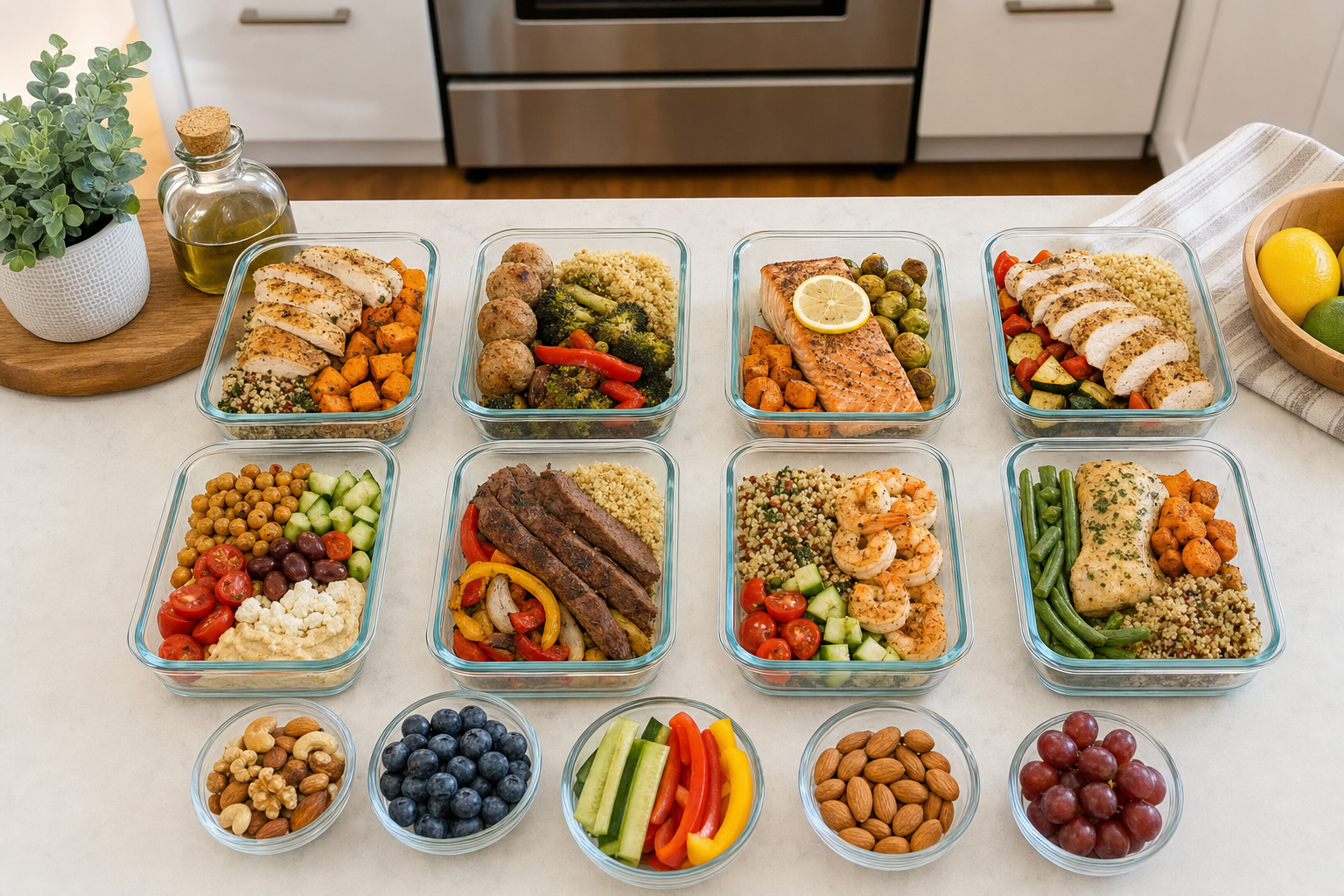
Our system includes a complete 30-day meal plan with 100+ anti-inflammatory recipes — most under 30 minutes — built around these exact principles. You can explore the FreshStart30 system to see how the meal plan, meal-planning guidance, and habit framework work together.
Movement and Strength Training Changes That Matter After 30
Cardio alone is rarely enough to break a plateau after 30. Strength training becomes the primary tool for preserving and rebuilding muscle mass — which is the engine of your resting metabolism. The American College of Sports Medicine recommends resistance training at least two days per week for adults, with evidence supporting even greater benefits for those over 30 who are managing body composition.
Practical movement changes that help break a plateau:
- Add two to three resistance training sessions per week if you are currently doing cardio only.
- Increase daily non-exercise activity (walking, standing, taking stairs) — this is often more impactful than adding gym sessions.
- Reduce excessive steady-state cardio if you are doing more than five sessions per week, as this can elevate cortisol and impair recovery.
- Prioritize progressive overload — gradually increasing resistance or reps over time — rather than simply repeating the same workout.
How Stress, Sleep, and Hormones Can Keep You Stuck
This is the section most weight-loss programs skip — and it is often the most important one for adults over 30. Chronic stress elevates cortisol, which directly promotes visceral fat storage and breaks down muscle tissue. Poor sleep disrupts the hormones that regulate hunger, satiety, and fat metabolism. Hormonal shifts — declining estrogen and progesterone in women, declining testosterone in men — alter where and how the body stores fat.
Addressing these factors does not require pharmaceutical intervention. Consistent sleep of seven to nine hours, stress-reduction practices such as walking, breathwork, or time in nature, and an anti-inflammatory nutrition plan all measurably improve hormonal balance over time. FreshStart30 is backed by a 60-day money-back guarantee.
A 7-Day Reset to Break a Weight Loss Plateau
If you want a structured starting point, here is a practical 7-day reset framework based on the FreshStart30 approach:
- Day 1–2: Audit your food intake honestly. Log everything without changing anything. Identify where protein, fiber, and sleep are falling short.
- Day 3–4: Increase protein at every meal. Eliminate ultra-processed snacks and replace with whole-food options. Aim for 7.5 hours of sleep.
- Day 5: Add a 20-minute resistance training session. Keep it simple — bodyweight squats, push-ups, rows.
- Day 6: Take a deliberate recovery day. Walk 20 minutes, reduce screen time in the evening, and prioritize an early bedtime.
- Day 7: Assess: how does your energy feel? How does your digestion feel? These are early signals of metabolic improvement, often before the scale moves.
This 7-day reset is a starting point. The full FreshStart30 protocol extends this into a complete 30-day system with daily structure, meal plans, and habit-building checkpoints.
Take the Weight-Loss Blocker Quiz and Get a Personalized Plan
FreshStart30 founder David Knox Vale — who lost 48 pounds in 90 days and reduced his waist by 10 inches using this same framework — built the FreshStart30 Weight Loss Blocker Quiz specifically to help adults over 30 identify which of the seven plateau triggers is most relevant to their situation. The quiz takes about two minutes, requires no email address, and gives you a personalized starting point based on your specific patterns.
Rather than guessing which variable to change first, the quiz helps you focus your energy where it will have the most impact — whether that is nutrition, sleep, stress, hormones, or movement. It is the fastest way to move from frustrated to focused.
Common Mistakes Adults Over 30 Make at a Plateau
These are the patterns we see most consistently when adults over 30 hit a plateau and struggle to break through:
- Cutting calories further: When progress stalls, the instinct is to eat less. But further restriction often deepens metabolic adaptation and accelerates muscle loss.
- Expecting overnight results: Metabolic adaptation took weeks to develop; reversing it takes weeks as well. Expecting a two-week fix leads to premature quitting.
- Falling for fad diets: Johns Hopkins Medicine notes that fad diets rarely produce sustainable results and often worsen metabolic health over time.
- Skipping meals: Irregular eating patterns disrupt insulin sensitivity and cortisol rhythms, making fat loss harder.
- Ignoring sleep and stress: These are not lifestyle extras — they are metabolic inputs that directly affect fat storage and hunger hormones.
- Jumping to supplements: No supplement addresses the root causes of a plateau. Whole-food nutrition and lifestyle changes do.
- Comparing to people in their 20s: The metabolic environment at 38 is genuinely different from 22. Strategies need to match the biology, not fight it.
- Expecting a fixed habit deadline. Habit timing varies; practice consistently. Read the research.
Frequently Asked Questions
How long does a weight loss plateau after 30 typically last?
A plateau can last anywhere from two weeks to several months depending on the underlying cause. If you address the root triggers — metabolic adaptation, sleep, stress, nutrition quality, and movement — most adults begin to see renewed progress within three to four weeks of making targeted changes.
Is it normal to stop losing weight even when eating in a calorie deficit?
Yes. Metabolic adaptation means your body reduces its calorie burn in response to a sustained deficit, eventually matching your intake. This is why eating less is rarely the solution to a plateau — the approach needs to evolve, not just the calorie number.
Does the FreshStart30 program help with weight loss plateaus specifically?
Yes. The FreshStart30 30-day metabolic reset was designed specifically for adults over 30 who have hit a plateau or found that previous approaches stopped working. It addresses nutrition, movement, sleep, stress, and hormonal factors in a structured 30-day framework. You can get started at freshstart30.com.
What is the FreshStart30 60-day money-back guarantee?
FreshStart30 offers a 60-day money-back guarantee on its paid membership plans. If you complete the program and are not satisfied with your results, you can contact support@freshstart30.com for a full refund. All plans are one-time payments with lifetime access — no subscriptions.
Should I do more cardio to break a weight loss plateau?
Not necessarily. Adding more cardio can elevate cortisol and impair recovery, which may worsen a plateau. Adding or prioritizing strength training is typically more effective for adults over 30 because it preserves muscle mass and supports resting metabolic rate.
Can hormones cause a weight loss plateau after 30?
Yes. Declining estrogen, progesterone, and testosterone after 30 alter how the body stores fat and uses energy. These hormonal shifts are a real and common plateau driver, particularly for women in perimenopause and men experiencing age-related testosterone decline. Always consult your physician if you suspect a hormonal issue.
How is FreshStart30 different from other weight loss programs?
FreshStart30 is built specifically for adults over 30 and addresses the metabolic, hormonal, and lifestyle factors that make weight loss harder after this age. It is anti-fad, evidence-based, and focused on sustainable habit formation rather than extreme restriction. Plans start with a free tier and go up to a one-time $397 Complete plan — no subscriptions, lifetime access.
Update Log
- July 2026: Article published covering plateau causes, nutrition and movement fixes, the 7-day reset framework, and the FreshStart30 Weight Loss Blocker Quiz for adults over 30.