Discover why weight loss and energy decline for men after 30 — and how the FreshStart30 metabolic reset framework addresses the real root causes like testosterone, insulin resistance, and cortisol.

Why Men Over 30 Struggle With Weight Loss & Energy
Understanding why men over 30 struggle with weight loss and energy is the first step toward actually doing something about it — and the answer goes far deeper than “eat less, move more.” The changes happening in your body after 30 are real, measurable, and addressable when you have the right framework. The FreshStart30 program was built specifically around these biological shifts so that men in their 30s, 40s, and 50s can stop fighting their own physiology and start working with it.
The biology of a 35-year-old man is meaningfully different from that of a 22-year-old — and most mainstream diet advice was never designed with that difference in mind. This guide breaks down the real reasons weight loss and energy become harder after 30, and explains how a structured, evidence-informed approach can change the trajectory without extreme restriction or unsustainable effort.
Why Weight Loss and Energy Change After 30
Starting in a man’s early 30s, several physiological processes begin shifting simultaneously. Resting metabolic rate — the number of calories your body burns at rest — gradually declines. Muscle mass, which is metabolically active tissue, begins to decrease unless actively maintained through resistance training and adequate protein intake. According to the Mayo Clinic, metabolism slows as part of the natural aging process, and this effect compounds over time.
At the same time, energy levels often dip — not because men are suddenly lazy, but because the hormonal and metabolic environment has shifted. Sleep quality tends to decline. Work and family demands increase. Recovery from exercise takes longer. These are not character flaws; they are predictable biological and lifestyle changes that require a different strategy than the one that worked at 22.
Why Belly Fat Gets More Stubborn
Visceral fat — the fat stored deep in the abdominal cavity — is particularly responsive to hormonal signals. As testosterone levels decline and cortisol levels rise, the body becomes more efficient at storing fat in the midsection and less efficient at releasing it. This is not simply a matter of eating too much; it is a hormonal and metabolic pattern that calorie counting alone does not address.
The Cleveland Clinic notes that hormonal changes with age make fat loss genuinely harder — particularly around the abdomen — and that sustainable strategies must account for these shifts rather than simply pushing harder on restriction. At FreshStart30, our 30-day metabolic reset was designed with exactly this in mind: addressing the hormonal and inflammatory environment, not just the calorie equation.
How Stress, Sleep, and Busy Schedules Disrupt Metabolism
Chronic stress is one of the most underappreciated drivers of weight gain and low energy in men over 30. When stress is sustained — whether from work pressure, financial strain, or family demands — the body maintains elevated cortisol levels. Cortisol signals the body to store energy as fat, particularly visceral fat, and simultaneously suppresses the hormones that support muscle maintenance and fat burning.
Sleep compounds this further. Poor or insufficient sleep disrupts the hormones that regulate hunger (ghrelin and leptin), increases appetite for high-calorie foods, and impairs insulin sensitivity. The CDC identifies sleep as a foundational pillar of metabolic health — yet it is routinely sacrificed by men in their 30s and 40s who are managing demanding schedules. A nutrition plan that ignores sleep and stress is addressing only part of the problem.
Testosterone, Insulin, and Inflammation
Three biological factors are central to the weight-loss and energy struggles of men over 30: declining testosterone, rising insulin resistance, and chronic low-grade inflammation.
Testosterone supports muscle mass, energy, motivation, and fat metabolism. As levels gradually decline through the 30s and 40s, men often notice reduced drive, slower recovery, and a tendency to gain fat even without significant dietary changes. Insulin resistance — where cells become less responsive to insulin’s signal to absorb glucose — means the body secretes more insulin to manage blood sugar, and elevated insulin promotes fat storage. According to the Cleveland Clinic, insulin resistance is closely linked to abdominal fat accumulation and is often a precursor to more serious metabolic conditions.
Chronic inflammation, driven by processed foods, poor sleep, and sustained stress, further disrupts hormonal signaling and makes fat loss harder. Harvard Health identifies anti-inflammatory nutrition as a key lever for reducing this systemic burden — which is why the FreshStart30 framework centers on whole, anti-inflammatory foods rather than calorie-restricted processed alternatives.
Why Dieting Harder Usually Backfires for Men 35 to 50
The instinct when weight loss stalls is to restrict more aggressively — cut more calories, skip more meals, add more cardio. For men over 35, this approach frequently makes things worse. Severe calorie restriction signals the body to conserve energy by slowing metabolism further. It also elevates cortisol, which promotes fat storage and muscle breakdown — the opposite of the desired outcome.
Extreme restriction also tends to be unsustainable. Men who white-knuckle through a crash diet for three weeks and then return to previous habits end up in a worse metabolic position than when they started. FreshStart30 founder David Knox Vale experienced this cycle firsthand before developing the structured, sustainable approach that led to his own 48-pound transformation in 90 days — without extreme restriction or fad protocols.
The FreshStart30 Approach to Resetting Energy and Fat Loss
At FreshStart30, we built the 30-day metabolic reset specifically for adults whose metabolism, hormones, and lifestyle have shifted after 30. The FreshStart30 system does not rely on calorie counting, meal replacement shakes, or extreme restriction. Instead, it works through four integrated levers: anti-inflammatory nutrition, blood sugar stabilization, stress and sleep support, and sustainable habit formation.
The program includes a complete 30-day meal plan, 100+ anti-inflammatory recipes (most under 30 minutes), meal-planning guidance, and progress tracking — all designed to fit into the real schedule of a man in his 30s, 40s, or 50s who has a job, a family, and limited time. For men dealing with the specific hormonal shifts of this life stage, the Testosterone Reset for Men Over 30 provides an advanced protocol built on the same evidence-based foundation.
Nutrition and Meal-Planning Shifts That Actually Work
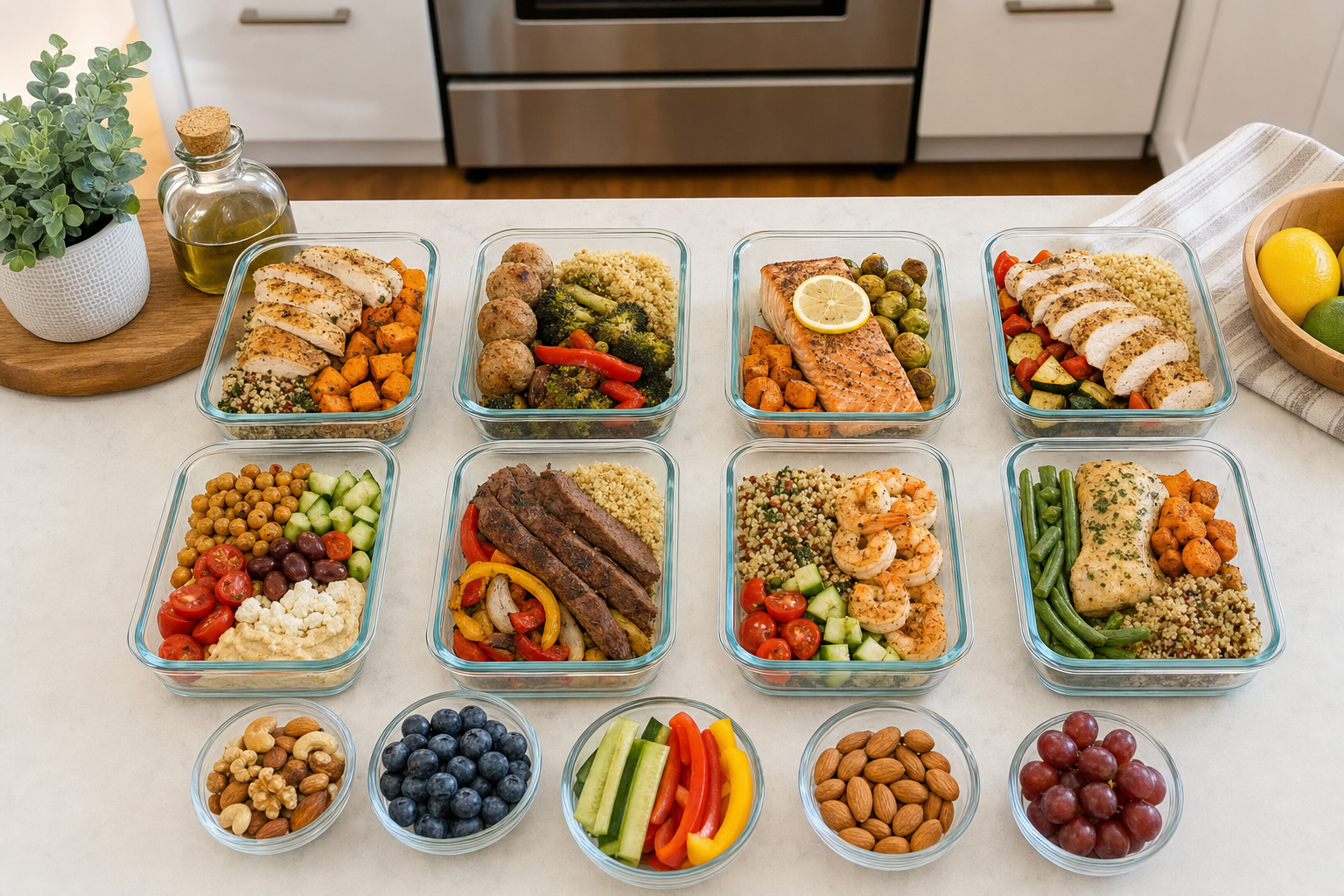
The most effective nutritional changes for men over 30 are not dramatic — they are consistent. Prioritizing protein at each meal supports muscle maintenance and satiety. Reducing refined carbohydrates and added sugars helps stabilize blood sugar and reduce insulin spikes. Incorporating anti-inflammatory foods — leafy greens, fatty fish, berries, olive oil, nuts — reduces the systemic inflammation that disrupts hormonal signaling.
Meal timing also matters. Eating in a way that supports stable blood sugar throughout the day — rather than large, infrequent meals that cause spikes and crashes — helps maintain energy and reduce cortisol-driven cravings. The USDA Dietary Guidelines emphasize nutrient-dense whole foods as the foundation of sustainable healthy eating — a principle that runs through every meal in the FreshStart30 plan.
Common Mistakes Men Over 30 Make
- Relying on calorie counting alone: Calories matter, but hormonal context matters more at this life stage. Counting calories without addressing insulin resistance or cortisol rarely produces lasting results.
- Expecting a fixed habit deadline. Habit timing varies; practice consistently. Read the research.
- Skipping meals to compensate: Skipping meals spikes cortisol and disrupts blood sugar, making fat storage more likely — not less.
- Ignoring sleep and stress: No nutrition plan fully works in a body running on five hours of sleep and chronic stress. These are not optional variables.
- Comparing results to their 20s: The body at 40 responds differently than at 22. Expecting the same timeline sets men up for frustration and early quitting.
- Jumping to supplements: Supplements do not fix a broken metabolic environment. Food, sleep, and stress management come first.
- Following fad diets designed for younger adults: Most popular diets were not designed for the hormonal and metabolic reality of men over 35.
Practical Steps to Get Started
- Take the FreshStart30 Weight Loss Blocker Quiz — a free 2-minute assessment that identifies which specific factors are most likely blocking your results right now.
- Prioritize protein and reduce refined carbs at your next meal — no overhaul required, just one consistent shift at a time.
- Protect seven to eight hours of sleep as a non-negotiable metabolic priority, not a luxury.
- Add a short daily walk — even 20 minutes after dinner meaningfully improves insulin sensitivity over time.
- Start the 30-day reset with a structured plan that removes the guesswork and addresses the real drivers of weight gain and low energy after 30.
Frequently Asked Questions
Why do men over 30 gain belly fat even when they haven’t changed their diet?
Hormonal shifts — particularly declining testosterone and rising insulin resistance — change how the body stores and releases fat, especially in the abdominal area. Even without dietary changes, these shifts can cause gradual fat accumulation around the midsection as men move through their 30s and 40s.
Does testosterone decline really affect weight loss for men over 30?
Yes. Testosterone supports muscle mass, energy, and fat metabolism. As levels gradually decline after 30, men tend to lose muscle and gain fat more easily — even with similar activity and eating habits. Addressing the broader metabolic environment (nutrition, sleep, stress) supports healthier hormonal function.
Is calorie counting enough for men over 35 who want to lose weight?
Calorie balance matters, but it is rarely sufficient on its own for men over 35. Insulin resistance, cortisol elevation, and hormonal shifts mean that the quality and timing of food — not just the quantity — significantly affect fat loss outcomes. The FreshStart30 framework addresses all of these factors together.
How does stress cause weight gain in men?
Chronic stress elevates cortisol, a hormone that signals the body to store fat — particularly visceral fat around the abdomen. Cortisol also increases appetite for high-calorie foods and suppresses the hormones that support muscle maintenance and fat burning, creating a compounding effect over time.
What is the FreshStart30 program and how does it help men over 30?
FreshStart30 is a 30-day metabolic reset program designed specifically for adults over 30. It includes a complete meal plan, 100+ anti-inflammatory recipes, meal-planning guidance, and a habit-building framework that addresses the real drivers of weight gain and low energy after 30 — not just calories. It is available at one-time pricing with lifetime access and is backed by a 60-day money-back guarantee.
Does FreshStart30 offer a money-back guarantee?
Yes. FreshStart30 is backed by a 60-day money-back guarantee. All membership tiers are one-time payments with lifetime access — no subscriptions or recurring charges.
How long does it take to see results with a metabolic reset approach?
Individual results vary, and no specific outcome can be guaranteed. Most men following a structured metabolic reset begin noticing changes in energy and appetite within the first two to three weeks as blood sugar stabilizes and cortisol patterns improve. Sustainable fat loss typically follows as these foundational shifts take hold.
Update Log
- August 2026: Article published covering the primary metabolic, hormonal, and lifestyle factors driving weight loss difficulty and low energy in men over 30, with FreshStart30 framework positioning and evidence-based outbound references.