Use a seven-day menu, everyday ingredients, and practical prep ideas to plan your meals. Learn what anti-inflammatory eating can and cannot promise.

Anti-Inflammatory Meal Planning: A Practical Seven-Day Guide
Start with a workable menu, ordinary grocery ingredients and a short shopping list. This guide explains what people mean by anti-inflammatory eating and gives you a seven-day menu you can adapt. A meal plan can organize your choices; it cannot diagnose inflammation or promise to reset your metabolism.
FreshStart30 provides educational resources for adults. This article and menu are not individualized nutrition advice or medical treatment. Discuss dietary changes with a qualified healthcare professional when you have a medical condition, take medicines, are pregnant or nursing, or have an eating-disorder history.
Keep inflammation and weight-management claims in perspective
Johns Hopkins Medicine’s overview distinguishes short-term inflammation after an injury or illness from persistent systemic inflammation. Its dietary guidance emphasizes overall eating patterns rather than one food or a single prescribed anti-inflammatory diet.
That general guidance is not evidence that FreshStart30 treats inflammation. Symptoms such as fatigue, bloating or difficulty losing weight do not identify a cause on their own. Turning 30 also does not establish that someone has insulin resistance or a hormone disorder.
The CDC describes weight management as involving eating patterns, activity, sleep and stress, while recognizing individual factors such as medicines and health conditions. Seek individualized guidance if weight or symptoms concern you.
What a meal plan can help you do
A plan gives you concrete decisions to work with: what to buy, what to prepare and which meal to use on a busy evening. It does not make calorie intake irrelevant or guarantee a particular response from your body.
Use the menu below as a starting point. Adjust ingredients for your preferences, budget, allergies and medical needs. Cooking times vary by recipe and preparation method; the plan does not promise that every dish takes less than 30 minutes.
Useful ingredients for your shopping list
- Vegetables: Spinach, kale, broccoli, cauliflower, peppers and Brussels sprouts.
- Fruit: Berries and other fruit you enjoy, including suitable frozen options.
- Grains and legumes: Oats, brown rice, quinoa, lentils, chickpeas and black beans.
- Protein choices: Fish, eggs, poultry, beans or other suitable alternatives.
- Fats and flavor: Olive oil, nuts, seeds, herbs and spices.
Choose ingredients you will actually use. Repeating a few familiar meals is a reasonable place to start; you do not need a kitchen full of specialty products.
Look at the whole pattern
Johns Hopkins’ guidance encourages limiting foods such as sugar-sweetened drinks, processed meats and deep-fried foods. It does not support this article’s earlier blanket claim that canola and other seed oils automatically drive inflammation; that claim has been removed.
Check labels for the information relevant to you and compare realistic alternatives. Avoid turning a meal plan into a growing list of forbidden foods. A dietitian can help adapt choices when a medical condition requires specific restrictions.
A seven-day menu to adapt
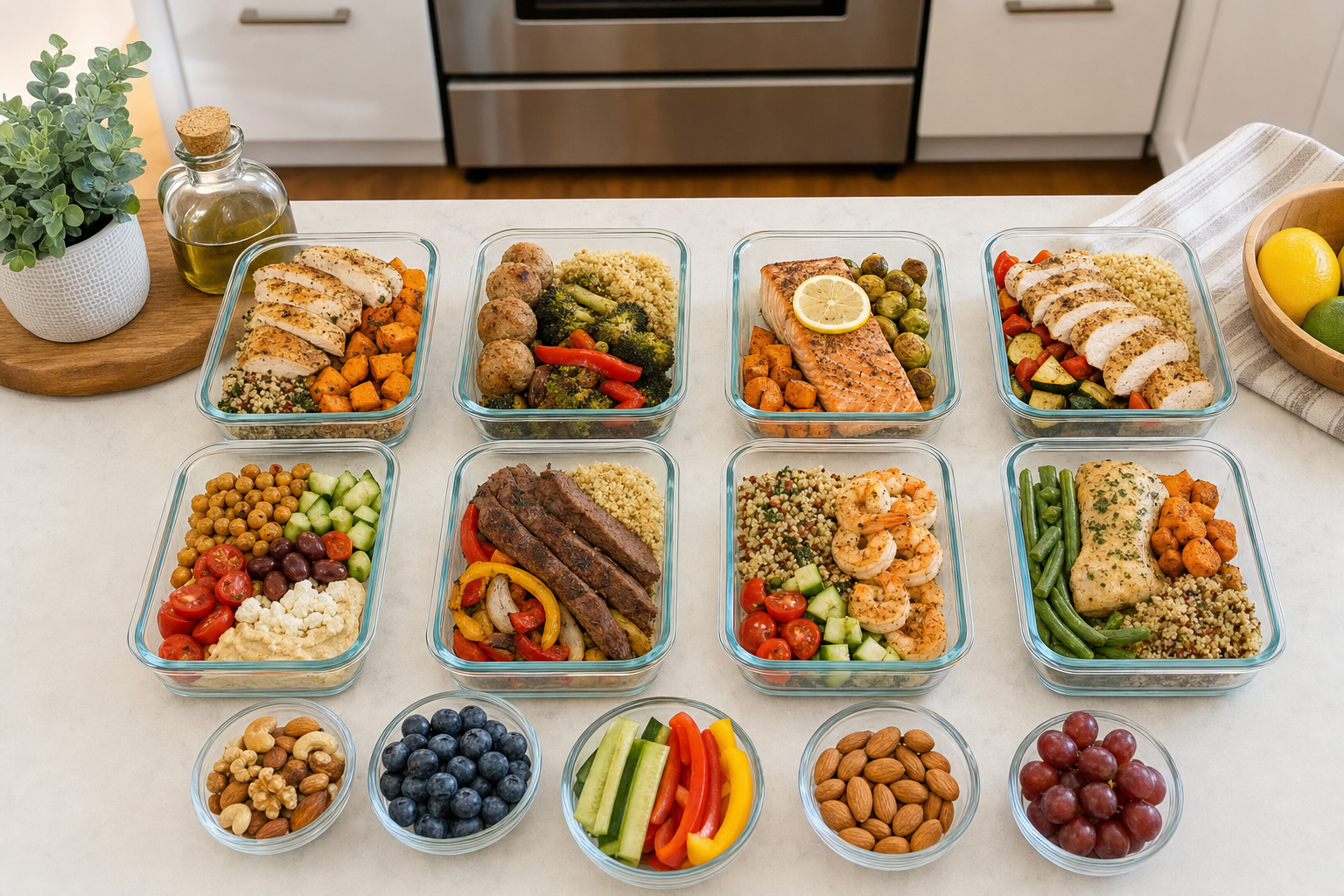
This example retains the original week’s meal structure, with a chickpea bowl in place of the red-meat dinner. It is not a complete nutrition prescription, a calorie-controlled diet or a treatment plan. Portions and additional foods depend on individual needs.
| Day | Breakfast | Lunch | Dinner |
|---|---|---|---|
| Monday | Eggs with spinach and avocado | Lentil soup with crusty sourdough | Baked salmon with roasted broccoli and quinoa |
| Tuesday | Greek yogurt with blueberries and walnuts | Large arugula salad with chickpeas and olive oil | Chicken thighs with roasted sweet potato and green beans |
| Wednesday | Overnight oats with chia seeds and raspberries | Leftover chicken and vegetable bowl | Turkey and black bean stir-fry with cauliflower rice |
| Thursday | Scrambled eggs with sautéed kale | Sardines on whole-grain crackers with cucumber | Baked cod with asparagus and brown rice |
| Friday | Smoothie: spinach, frozen berries, flaxseed, almond milk | Lentil and roasted vegetable wrap | Chickpea bowl with Brussels sprouts and olive oil |
| Saturday | Veggie omelette with olive oil | Large mixed salad with hard-boiled eggs | Salmon patties with steamed broccoli and quinoa |
| Sunday | Chia pudding with mixed berries | Chicken and vegetable soup | Slow-cooked lentil stew with crusty bread |
Build a meal from components
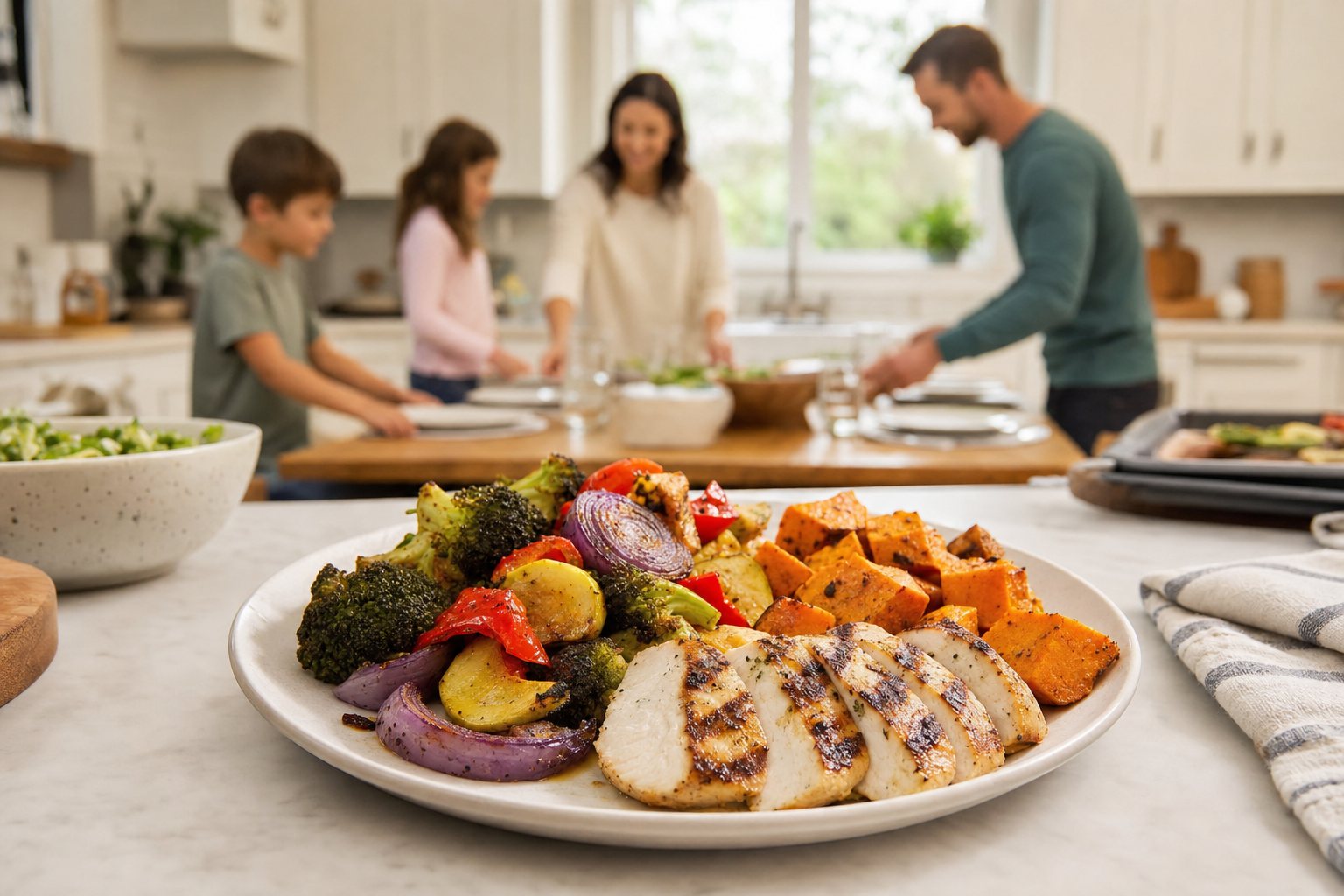
Think about a protein food, vegetables, and a grain or other starchy side. Add other foods as appropriate to your needs. For example, chicken, rice and roasted vegetables can become a dinner one day and ingredients for a bowl another day.
This is an organizational tool, not a formula that guarantees four or five hours of blood-sugar control. FreshStart30 does not require calorie logging, but a person’s overall intake still matters when assessing weight-management goals.
Prep for the nights that need it
- Pick the two busiest evenings and choose those dinners first.
- Check what is already in your kitchen before writing the shopping list.
- Prepare one useful component, such as a grain, sauce or batch of vegetables.
- Keep a simple backup meal available for a changed schedule.
- Follow safe food-storage instructions and freeze suitable extras; do not assume cooked food will keep for an entire week.
At the end of the week, keep the meals that worked and change the ones that did not. There is no fixed day when a routine must become automatic.
What FreshStart30 includes
FreshStart30 brings meal-planning materials into one member area. Premium costs $97 once and includes the 30-day meal-planning resources, 100+ recipes and tracking tools with lifetime access. Elite costs $297 and adds the six-week course. Complete Program costs $397. Premium does not include the structured course.
Compare current plans and inclusions, or start with the free sample resources. Review the 60-day refund policy for its terms.
David Knox Vale’s story explains the personal experience behind FreshStart30. His reported 48-pound loss over 90 days is personal history, not a typical result, a controlled study or a promise to customers.
Avoid these planning traps
- Expecting a meal plan to diagnose the reason for symptoms or weight changes.
- Choosing a long list of unfamiliar recipes for an already busy week.
- Ignoring food preferences, allergies or individual medical advice.
- Treating one changed meal as a failed week.
- Expecting guaranteed results or automatic habits on a timetable.
Choose your next step
- Choose three meals from the sample menu that fit your week.
- Write a shopping list and select one prep task.
- If you want help reflecting on your routine, take the FreshStart30 habits quiz. It is a nonclinical reflection tool, not a diagnosis. The final step asks for your name and email.
Common questions
What is an anti-inflammatory meal plan?
It generally refers to a menu organized around a broader eating pattern, rather than a single standardized diet. It should not be presented as a guaranteed metabolic reset or a substitute for medical treatment.
Will this meal plan make me lose weight?
No particular result is guaranteed. This sample is a planning aid. Overall intake, activity, health conditions, medicines and other personal circumstances affect weight management.
Do I have to count calories to use FreshStart30?
The planning resources can be used without calorie logging. That does not mean total intake is irrelevant or that a plate formula automatically produces weight loss. Ask for individualized guidance when needed.
Is the course included with Premium?
No. Premium is $97 once for the meal-planning resources. The six-week course is included with Elite at $297 and Complete Program at $397.
Where do I ask about support or a refund?
Use the contact page or email info@freshstart30.com. Read the refund policy for eligibility and terms.
Can I adapt the sample to a busy schedule?
Yes. Repeat familiar meals, use suitable leftovers and prepare one component ahead of time. The amount of prep you need depends on your recipes and schedule.
Update log
- September 14, 2026: Corrected health claims, quiz/support links and current plan information; retained the seven-day menu with a chickpea dinner substitution; added source attribution.
- May 2026: Original article published.