Learn how to lose weight after 30 without counting calories. The FreshStart30 framework uses metabolic reset, anti-inflammatory meals, and sustainable habits — no obsessive tracking required.

How to Lose Weight After 30 Without Counting Calories
If you want to know how to lose weight after 30 without counting calories, you are not alone — and the answer has less to do with math and more to do with how your metabolism actually works after your 30s. The FreshStart30 framework was built specifically for this challenge: helping adults over 30 reset their metabolic signals, stabilize blood sugar, and build sustainable habits without obsessive tracking or extreme restriction.
Pricing, plan tiers, and program inclusions are accurate as of publication and may change. Individual results vary. Statements have not been evaluated by the FDA. FreshStart30 is not intended to diagnose, treat, cure, or prevent any disease.
Most adults over 30 have tried the calorie-counting approach at least once. They log meals, hit their targets, and still feel like the scale barely moves. This is not a willpower problem. It is a metabolic signaling problem — and it is exactly what the FreshStart30 framework was designed to address. Below, we walk through the science, the strategy, and the practical steps you can start using today.
Why Weight Loss After 30 Feels Harder Than It Used To
Starting in your early 30s, several biological shifts begin working against the strategies that used to work in your 20s. Muscle mass gradually declines, which lowers your resting metabolic rate. Insulin sensitivity often decreases, meaning your body is less efficient at using carbohydrates for energy and more likely to store them as fat. Cortisol — the stress hormone — tends to run higher in the busy-life years of your 30s and 40s, which directly promotes abdominal fat storage.
For women, perimenopause can begin as early as the mid-30s, bringing estrogen fluctuations that affect fat distribution and appetite regulation. For men, testosterone levels begin a gradual decline after 30, reducing the metabolic advantage that testosterone provides. According to the Cleveland Clinic, these age-related metabolic changes are well-documented and require a different approach than simply eating less.
The good news: these shifts are addressable. They just require a smarter framework than a calorie deficit alone.
Why Calorie Counting Stops Working for Many Adults 30+
Calorie counting treats all calories as equal and ignores the hormonal environment in which those calories are processed. Two people eating the same 1,800 calories can have dramatically different fat-storage outcomes depending on their insulin sensitivity, cortisol levels, sleep quality, and the composition of those meals.
For adults with even mild insulin resistance — which becomes increasingly common after 30 — a meal high in refined carbohydrates triggers a large insulin response that promotes fat storage regardless of the calorie count. Chronic calorie restriction also tends to lower thyroid output and increase cortisol, making the body more efficient at storing fat over time. This is why many adults in their 30s and 40s feel like they are eating less than ever but gaining weight anyway.
Counting calories is not inherently wrong, but for most adults over 30, it addresses the wrong variable. The more productive question is: what signals are your meals sending to your hormones?
The FreshStart30 Approach: Lose Weight by Improving Metabolic Signals
FreshStart30 founder David Knox Vale developed the FreshStart30 framework after his own 48-pound transformation in 90 days — not through calorie restriction, but through a structured metabolic reset that addressed the root causes of weight gain after 30. The core insight: when you improve the quality of the signals your food sends to your hormones, your body naturally moves toward a healthier weight without requiring obsessive tracking.
The FreshStart30 30-day metabolic reset is built around four pillars: anti-inflammatory nutrition, blood sugar stability, sustainable habit formation, and hormone-friendly meal timing. Each pillar works together to reduce the chronic low-grade inflammation and insulin dysregulation that are the most common drivers of stubborn weight gain in adults over 30.
This is not a fad diet. There are no banned food groups, no extreme calorie targets, and no meal replacement shakes. It is a structured, evidence-based system designed for real adults with real schedules.
What to Eat Instead of Tracking Every Bite
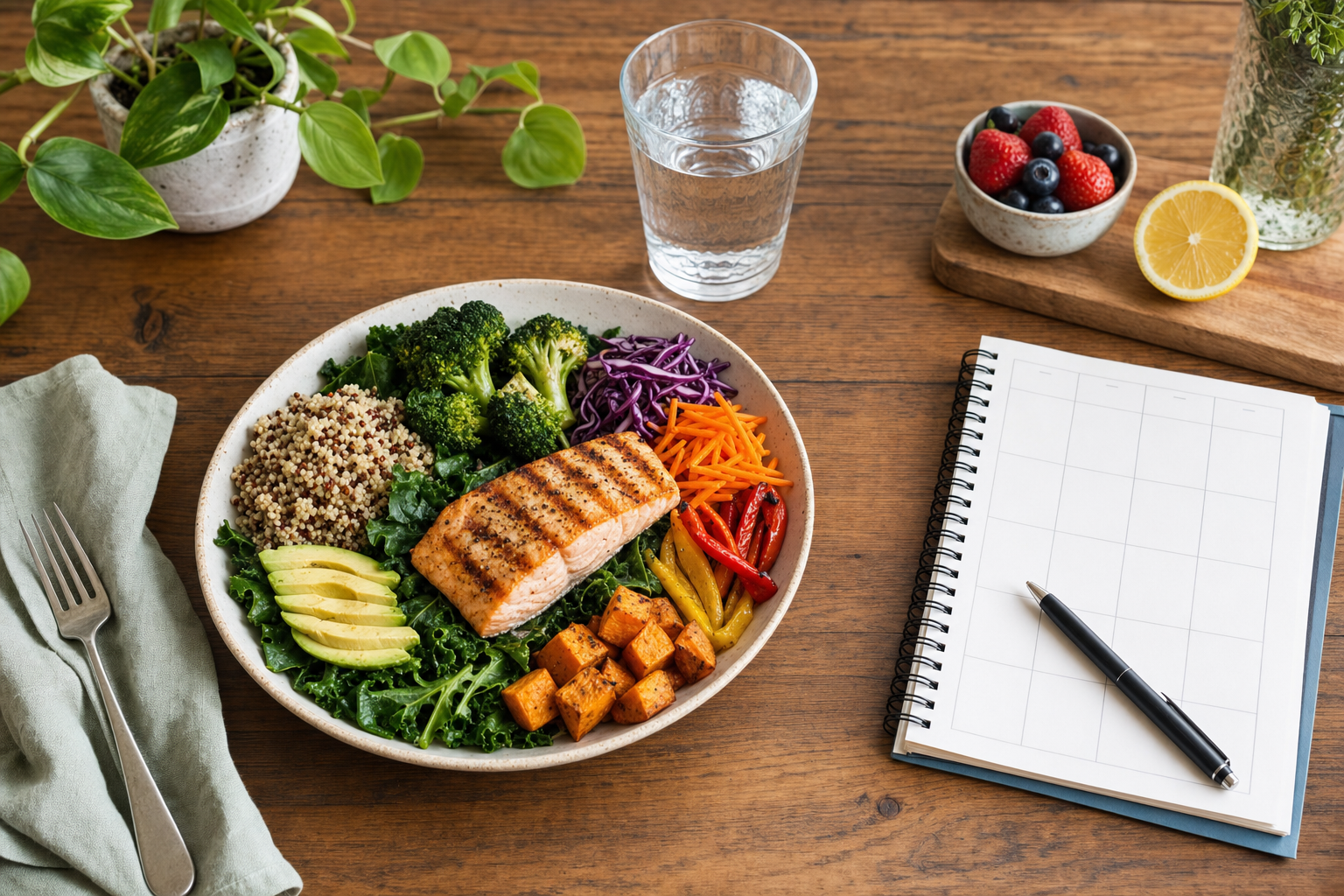
Instead of counting calories, the FreshStart30 approach focuses on food quality and meal composition. Harvard Health research on anti-inflammatory foods consistently shows that diets rich in vegetables, lean proteins, legumes, nuts, and healthy fats reduce systemic inflammation — one of the primary drivers of insulin resistance and weight gain after 30.
Practically, this means building most meals around:
- Protein: Eggs, chicken, fish, legumes, Greek yogurt — at least 25–30g per meal to support satiety and muscle retention.
- Non-starchy vegetables: Leafy greens, broccoli, zucchini, peppers — fiber that slows glucose absorption and feeds beneficial gut bacteria.
- Stable-energy carbohydrates: Sweet potatoes, oats, quinoa, brown rice — whole-food carbs that provide energy without sharp insulin spikes.
- Healthy fats: Avocado, olive oil, nuts — which slow digestion and support hormone production.
The goal is not perfection at every meal. It is consistency across most meals — a principle that is far more sustainable than daily calorie math.
The 5 Daily Habits That Make Weight Loss Easier Without Counting
Research on habit formation consistently shows that automatic behaviors — not willpower — drive long-term outcomes. At FreshStart30, our system is built around five daily habits that, once established, make healthy eating and metabolic health largely automatic:
- Eat a protein-first breakfast within 60 minutes of waking. This stabilizes blood sugar from the start of the day and reduces afternoon cravings.
- Drink water before each meal. Mild dehydration is frequently misread as hunger. Consistent hydration reduces unnecessary snacking.
- Move for at least 20 minutes daily. Walking after meals is particularly effective for blood sugar management — it does not need to be intense exercise.
- Stop eating at least 2–3 hours before bed. Late-night eating disrupts insulin sensitivity and sleep quality simultaneously.
- Prioritize 7–8 hours of sleep. The CDC notes that insufficient sleep is directly linked to increased hunger hormones and weight gain.
None of these habits require tracking an app. They require consistency — and the FreshStart30 30-day structure is specifically designed to help you build all five simultaneously.
How to Build Simple Meals for Busy Weekdays
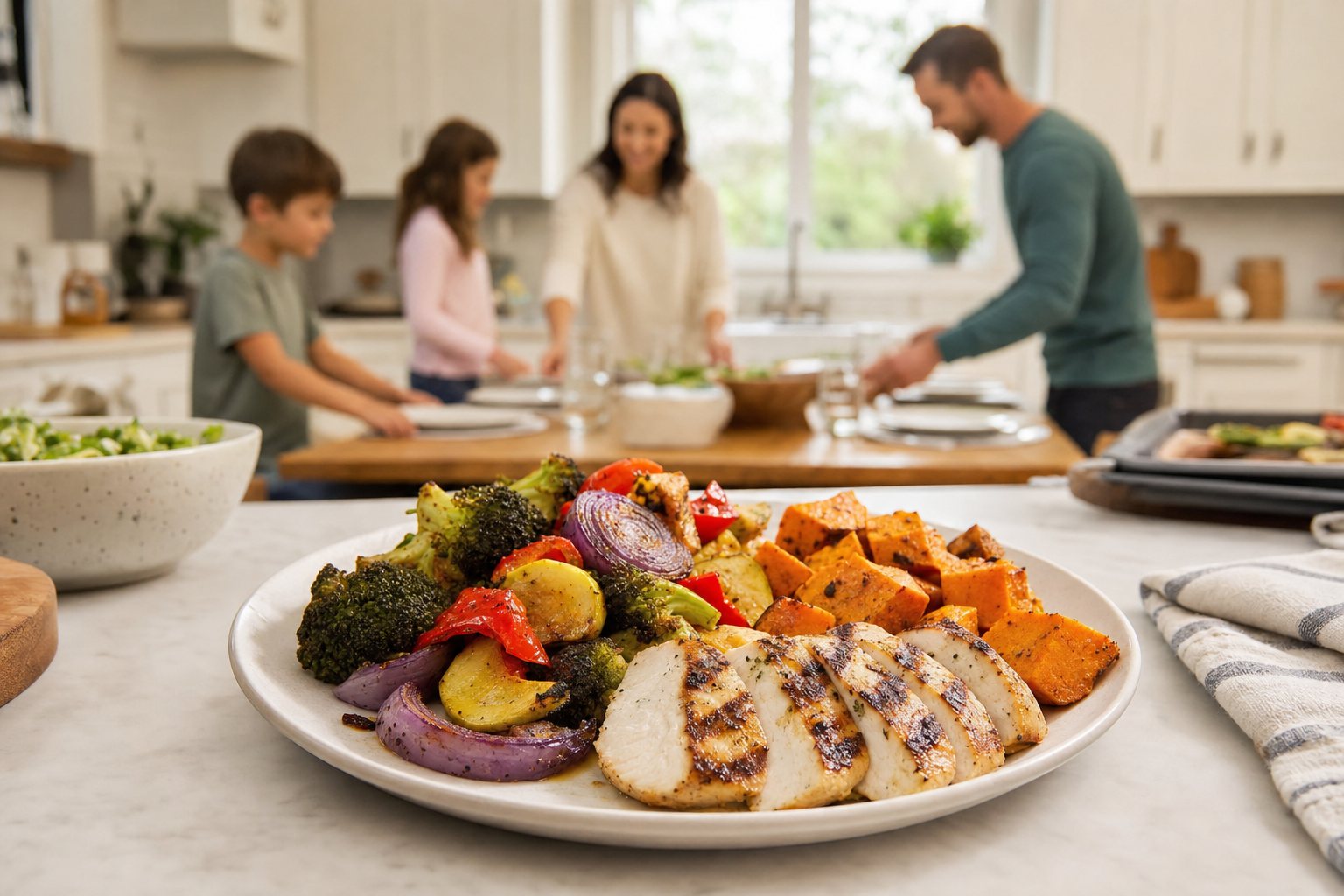
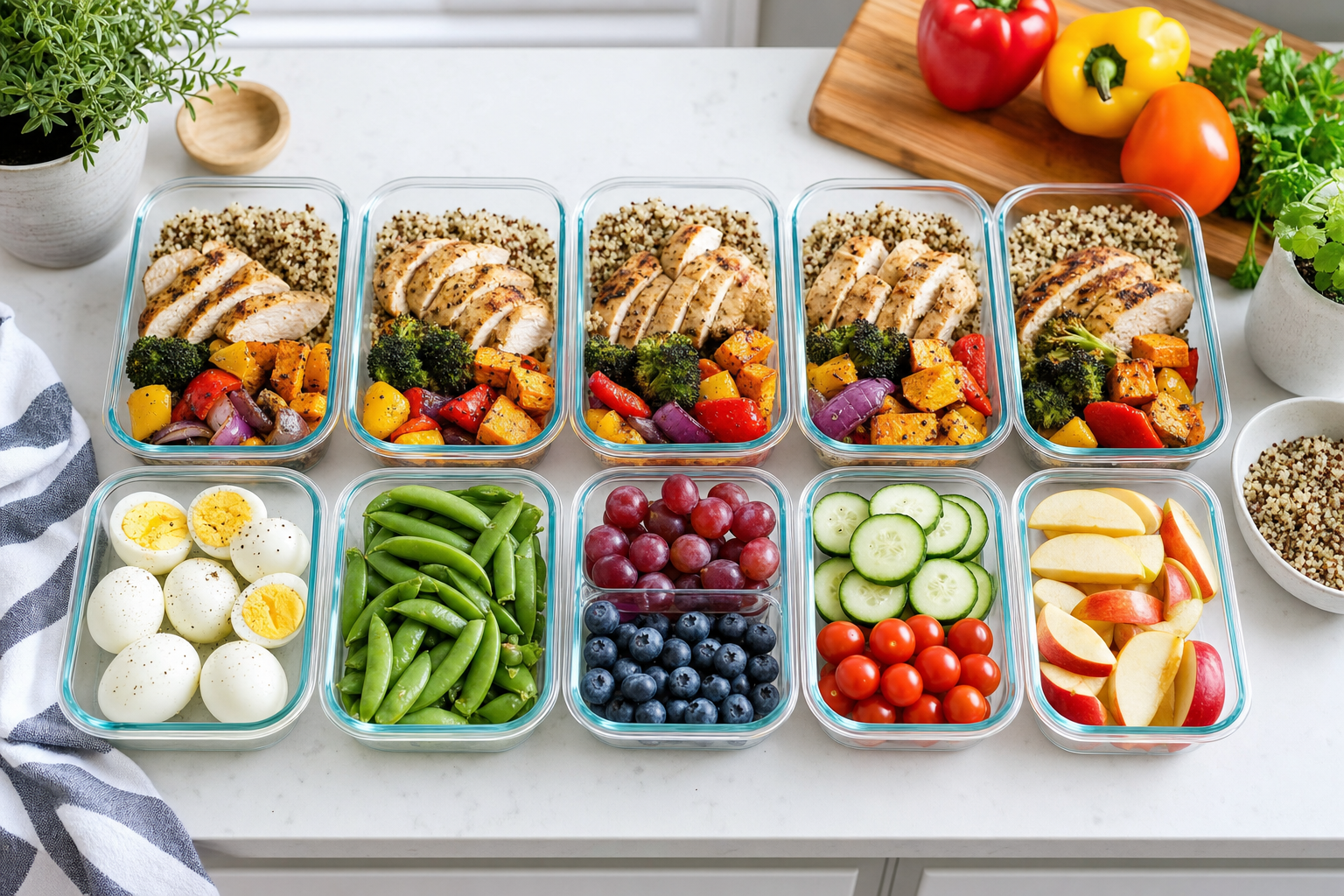
One of the most common reasons adults over 30 abandon healthy eating is time. The FreshStart30 meal plan addresses this directly: most recipes in our system take under 30 minutes, use family-friendly ingredients, and are designed for batch preparation so one cooking session covers multiple meals.
A practical weekday framework looks like this:
- Breakfast: Scrambled eggs with spinach and avocado, or Greek yogurt with berries and a handful of nuts.
- Lunch: A large salad with grilled chicken or canned salmon, olive oil dressing, and a side of whole-grain crackers or a small sweet potato.
- Dinner: A sheet-pan meal — protein (salmon, chicken thighs, or chickpeas) roasted with two or three vegetables and a drizzle of olive oil.
- Snacks (if needed): Apple with almond butter, hard-boiled eggs, or hummus with sliced vegetables.
The FreshStart30 system includes a complete 30-day meal plan, 100+ anti-inflammatory recipes, and weekly shopping lists — so you never have to figure out what to eat from scratch.
Common Weight-Loss Blockers After 30 and How to Fix Them
Even with the right approach, certain patterns consistently derail adults over 30. Here are the most common mistakes we see — and how to address them:
- Relying on calorie counting alone. As discussed above, this ignores the hormonal context that matters most after 30. Shift focus to meal quality and composition.
- Expecting overnight results. Metabolic reset takes time. How quickly you notice changes in energy, sleep, or appetite varies from person to person, and FreshStart30 does not guarantee results by any particular day. Results vary by individual.
- Skipping meals to “save” calories. Skipping meals — especially breakfast — tends to spike cortisol and increase insulin resistance, making fat loss harder, not easier.
- Ignoring sleep and stress. Chronic stress and poor sleep are metabolic disruptors that no diet can fully compensate for. These must be addressed alongside nutrition.
- Quitting before habits become automatic. Habit-formation research (Lally et al., 2010) found that new routines took anywhere from 18 to 254 days to feel automatic, with a median of about 66 days — so a 30-day reset is a starting point, not a finish line. A new routine is easiest to abandon before it has become automatic, which is why structure matters more than perfection at the start.
- Comparing progress to people in their 20s. A 42-year-old body operates differently than a 22-year-old body. The goal is progress relative to your own baseline — not someone else’s timeline.
- Jumping to supplements or extreme protocols. Supplements and extreme restriction do not fix the underlying metabolic signals. A structured food-first reset does.
What Results to Expect in the First 30 Days
Individual results vary, and FreshStart30 does not make specific pound-loss guarantees. What the 30-day reset is designed to produce — based on the framework’s structure — includes: reduced cravings and hunger between meals, more stable energy throughout the day, improved sleep quality, reduced bloating, and the establishment of five core metabolic habits that continue working beyond the 30 days.
Body composition changes are real but individual. Factors including starting metabolic health, sleep quality, stress levels, hormonal status, and consistency all influence outcomes. The 30-day reset is a starting point — a metabolic foundation — not a finish line.
FreshStart30 is backed by a 60-day money-back guarantee, so you can go through the full 30-day reset and have time to evaluate your results with zero financial risk.
When to Use Extra Support for Hormones, Menopause, or Low Testosterone
For some adults over 30, the standard metabolic reset is the right starting point. For others — particularly women navigating perimenopause or menopause, or men experiencing symptoms of low testosterone — additional hormone-specific support can make a meaningful difference.
The Office on Women’s Health notes that hormonal changes during perimenopause and menopause significantly affect metabolism, fat distribution, and appetite regulation. FreshStart30 offers a dedicated Hormone Reset for Women protocol designed specifically for women ages 30–50 navigating these shifts.
For men, declining testosterone after 30 affects muscle retention, energy, and metabolic rate. FreshStart30’s Testosterone Reset for Men Over 30 protocol addresses the nutrition and lifestyle factors that support healthy testosterone levels through food-first, evidence-based strategies — not supplements or pharmaceuticals.
Both advanced protocols are available within the FreshStart30 membership tiers. If you are unsure where to start, the free Weight Loss Blocker Quiz at freshstart30.com takes about two minutes and helps identify which patterns are most likely blocking your results.
Frequently Asked Questions
Can you really lose weight after 30 without counting calories?
Yes. For many adults over 30, improving meal quality, blood sugar stability, and daily habits is more effective than calorie counting because it addresses the hormonal and metabolic shifts that make calorie math less reliable after 30. The FreshStart30 framework is built specifically around this approach.
Why is it harder to lose weight after 30 than it was in my 20s?
After 30, muscle mass gradually declines, insulin sensitivity often decreases, and hormonal changes (including shifts in estrogen, testosterone, and cortisol) alter how your body stores and burns fat. These changes require a different strategy than the approaches that worked in your 20s.
What foods help with weight loss after 30 without calorie tracking?
Focus on protein-rich foods (eggs, fish, legumes, Greek yogurt), non-starchy vegetables, fiber-rich whole-food carbohydrates (oats, sweet potatoes, quinoa), and healthy fats (avocado, olive oil, nuts). This combination naturally stabilizes blood sugar and reduces hunger without requiring calorie counting.
How long does it take to see results with the FreshStart30 program?
Individual results vary. How quickly you notice changes in energy, sleep, or appetite varies from person to person, and FreshStart30 does not guarantee results by any particular day. Body composition changes follow over the full 30-day reset and beyond. FreshStart30 is backed by a 60-day money-back guarantee so you can evaluate your results with no financial risk.
Is FreshStart30 a subscription or a one-time payment?
FreshStart30 offers one-time, lifetime-access pricing with no subscriptions. Plans start with a free tier and go up to Premium ($97), Elite ($297), and Complete ($397) — all one-time payments.
Does FreshStart30 have a money-back guarantee?
Yes. FreshStart30 is backed by a 60-day money-back guarantee, giving you enough time to complete the full 30-day reset and assess your results before making a final decision.
Is there a version of FreshStart30 for women going through perimenopause or menopause?
Yes. FreshStart30 offers a dedicated Hormone Reset for Women protocol designed for women ages 30–50 who are navigating perimenopause or menopause. It addresses the specific hormonal and metabolic patterns common during this life stage using a food-first, evidence-based approach.
Update Log
- May 2026: Article published covering the FreshStart30 approach to weight loss after 30 without calorie counting, including metabolic reset principles, anti-inflammatory nutrition, five daily habits, common blockers, and hormone-specific support options.