Struggling to lose weight during perimenopause? Discover a hormone-friendly perimenopause weight loss meal plan designed for women over 40, with anti-inflammatory foods, protein-first eating, and a simple 7-day framework from FreshStart30.

Perimenopause Weight Loss Meal Plan After 40
A perimenopause weight loss meal plan looks different from any diet you may have tried in your 20s or 30s — and for good reason. During perimenopause, shifting estrogen, rising cortisol, and growing insulin resistance change how your body stores fat, responds to food, and recovers from stress. The FreshStart30 framework was built specifically to address these hormonal shifts with real food, sustainable habits, and a 30-day metabolic reset designed for women over 40.
Pricing, plan tiers, and program inclusions are accurate as of publication and may change. Individual results vary. Statements have not been evaluated by the FDA. FreshStart30 is not intended to diagnose, treat, cure, or prevent any disease.
Perimenopause typically begins in a woman’s early-to-mid 40s and can last several years before menopause. During this window, estrogen levels fluctuate unpredictably, progesterone declines, cortisol sensitivity increases, and insulin resistance often worsens. These changes don’t mean weight loss is impossible — they mean the old approach of eating less and moving more needs to be replaced with a smarter, hormone-aware strategy. The sections below break down exactly what that looks like in practice.
Why Weight Loss Changes During Perimenopause After 40
The Cleveland Clinic notes that metabolic rate slows with age, and perimenopause accelerates this shift. Declining estrogen affects how the body distributes fat — shifting storage from hips and thighs toward the abdomen. At the same time, muscle mass naturally decreases, which lowers resting calorie burn. Cortisol, the stress hormone, becomes more disruptive to sleep and fat storage. And insulin resistance — the body’s reduced ability to use glucose efficiently — makes blood sugar swings more frequent, driving cravings and energy crashes that feel impossible to control.
This is not a willpower problem. It is a hormonal and metabolic shift that requires a different nutritional framework — one built around blood sugar balance, anti-inflammatory eating, and adequate protein rather than aggressive calorie restriction.
The FreshStart30 Meal Plan Principles for Hormone-Friendly Fat Loss
At FreshStart30, we built the 30-day metabolic reset specifically for adults whose metabolism has shifted after 30 — and our Hormone Reset for Women goes deeper for women navigating perimenopause. The framework rests on four non-negotiable principles:
- Protein first: Every meal anchors around a quality protein source to preserve lean muscle, support satiety hormones, and reduce the blood sugar spike that drives afternoon cravings.
- Fiber as a foundation: Vegetables, legumes, and whole grains slow glucose absorption and feed the gut microbiome, which plays a direct role in estrogen metabolism.
- Anti-inflammatory fats: Olive oil, avocado, fatty fish, and nuts reduce systemic inflammation that worsens hormonal symptoms and fat storage.
- Consistent meal timing: Eating at regular intervals — rather than skipping meals — keeps cortisol and insulin in a more stable range throughout the day.
FreshStart30 founder David Knox Vale developed this framework after his own 48-pound transformation in 90 days, and the same metabolic-reset principles have since been adapted into the Hormone Reset for Women protocol to address the specific needs of women in their 40s and beyond.
What to Eat More Of: Protein, Fiber, Healthy Fats, and Anti-Inflammatory Foods
Harvard Health identifies anti-inflammatory foods — including leafy greens, berries, fatty fish, olive oil, and nuts — as key tools for reducing the chronic low-grade inflammation that worsens with hormonal shifts. For a perimenopause weight loss meal plan, these foods do double duty: they support fat loss and reduce the joint pain, bloating, and fatigue that often accompany this life stage.
Prioritize these food groups:
- Lean and fatty proteins: Eggs, chicken, turkey, salmon, sardines, Greek yogurt, cottage cheese, lentils, and edamame. Aim for protein at every meal and most snacks.
- Non-starchy vegetables: Spinach, kale, broccoli, cauliflower, zucchini, bell peppers, cucumber, and asparagus. Fill half your plate at lunch and dinner.
- Fiber-rich carbohydrates: Oats, quinoa, sweet potato, black beans, chickpeas, and berries. These provide energy without the sharp blood sugar spike of refined carbs.
- Healthy fats: Extra-virgin olive oil, avocado, walnuts, flaxseed, and chia seeds. These support hormone production and reduce cortisol-driven inflammation.
- Phytoestrogen-containing foods: Flaxseed, edamame, and tempeh contain plant compounds that may support estrogen balance during perimenopause — discuss with your physician if you have hormone-sensitive conditions.
What to Reduce If Cravings, Belly Fat, and Energy Crashes Are Getting Worse
Reducing certain foods is not about restriction for its own sake — it is about removing the inputs that amplify perimenopausal symptoms. Insulin resistance, which becomes more common during perimenopause, is directly worsened by frequent consumption of refined carbohydrates, added sugars, and ultra-processed foods.
Consider reducing:
- Added sugars and sweetened beverages: These cause rapid blood sugar spikes followed by crashes that drive cravings and fat storage, particularly around the abdomen.
- Refined grains: White bread, white rice, and most packaged crackers and cereals digest quickly and spike insulin without providing meaningful fiber or protein.
- Alcohol: Even moderate alcohol disrupts sleep quality, raises cortisol, and interferes with estrogen metabolism — all of which worsen perimenopausal symptoms.
- Ultra-processed snack foods: These are engineered to override satiety signals, making portion control nearly impossible regardless of willpower.
- Excessive caffeine late in the day: Caffeine after early afternoon can disrupt the sleep quality that is already compromised during perimenopause, raising cortisol the following day.
A Simple 7-Day Perimenopause Weight Loss Meal Plan
The following is a general framework — not a rigid prescription. Adjust portions to your hunger and energy levels. Every day follows the Protein-Fiber-Fat sequence and keeps blood sugar as stable as possible.
| Day | Breakfast | Lunch | Dinner |
|---|---|---|---|
| 1 | Scrambled eggs with spinach and avocado | Grilled chicken salad with olive oil and lemon | Baked salmon with roasted broccoli and quinoa |
| 2 | Greek yogurt with berries and chia seeds | Lentil soup with a side of leafy greens | Turkey stir-fry with zucchini and brown rice |
| 3 | Oats with flaxseed, walnuts, and blueberries | Tuna-stuffed avocado with cucumber slices | Chicken thighs with roasted sweet potato and asparagus |
| 4 | Cottage cheese with sliced peaches and pumpkin seeds | Black bean and vegetable bowl with salsa | Baked cod with cauliflower rice and sautéed kale |
| 5 | Two-egg veggie omelet with feta | Grilled salmon over mixed greens with olive oil | Ground turkey lettuce wraps with bell pepper and avocado |
| 6 | Smoothie: spinach, frozen berries, Greek yogurt, flaxseed, water | Chickpea and roasted vegetable bowl | Shrimp with garlic, olive oil, zucchini noodles, and cherry tomatoes |
| 7 | Overnight oats with chia, almond butter, and raspberries | Turkey and avocado lettuce wraps | Baked chicken with roasted Brussels sprouts and quinoa |
All of these meal patterns are reflected in the FreshStart30 Complete 30-Day Meal Plan, which includes full recipes, prep instructions, and meal-planning guidance so you are never left guessing.
Smart Snack, Grocery, and Meal-Prep Ideas for Busy Women
One of the most common reasons perimenopausal women stall on a meal plan is not lack of motivation — it is lack of preparation. When hunger hits and nothing is ready, the path of least resistance is usually a processed snack that spikes blood sugar and restarts the craving cycle.
Hormone-friendly snack ideas:
- Hard-boiled eggs with a small handful of walnuts
- Apple slices with almond butter
- Greek yogurt with a tablespoon of flaxseed
- Celery and cucumber with hummus
- A small portion of edamame with sea salt
Weekly meal-prep priorities:
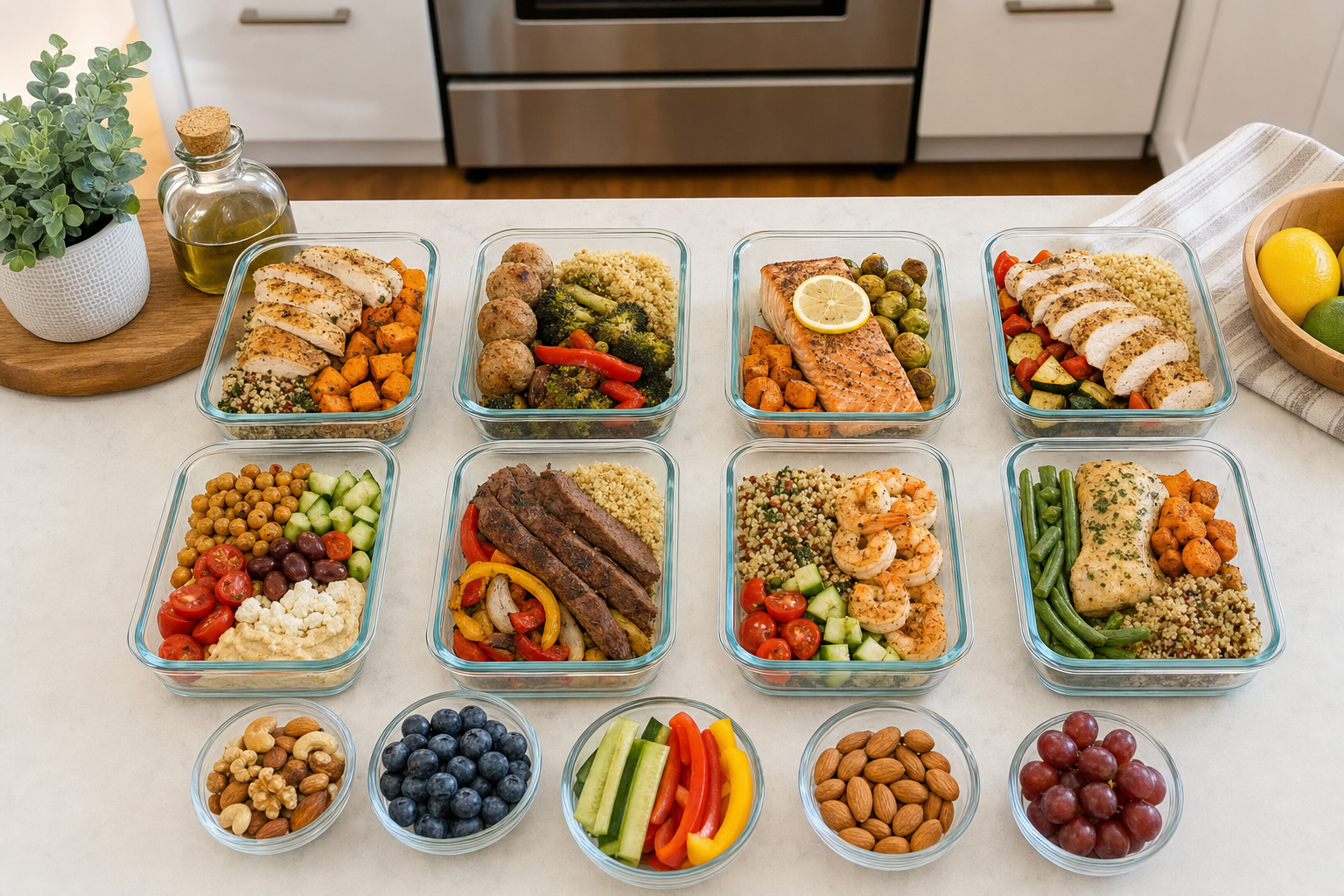
- Cook a large batch of protein (chicken, hard-boiled eggs, or salmon) on Sunday
- Pre-chop vegetables and store in clear containers at eye level in the fridge
- Prepare a grain base (quinoa or oats) that can be used across multiple meals
- Pre-portion snacks into small containers so grab-and-go choices are already made
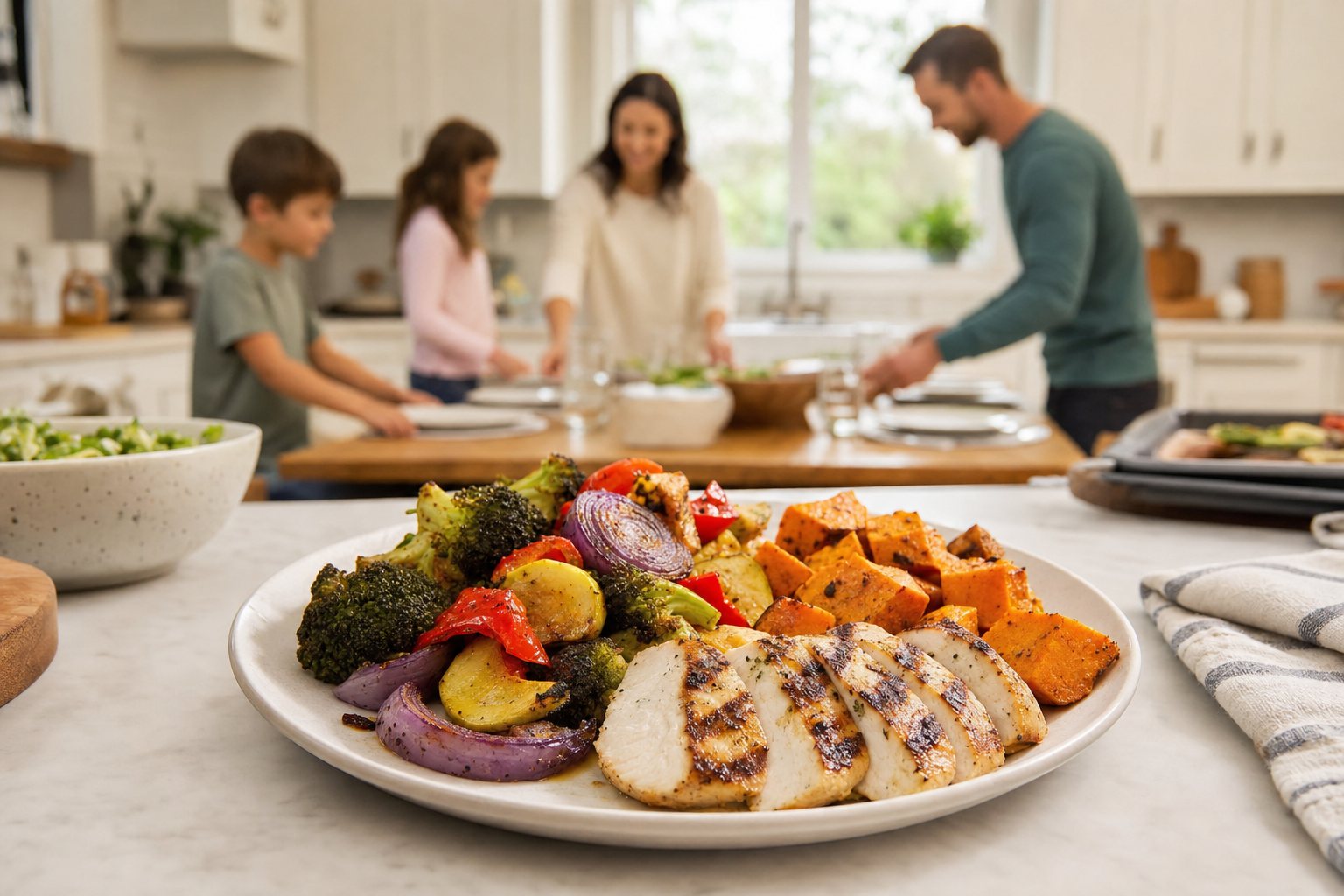
Our system at FreshStart30 includes done-for-you meal-planning guidance organized by category so grocery trips take less time and result in fewer impulse purchases. Most recipes in the FreshStart30 library are ready in under 30 minutes and are designed to be family-friendly — so you are not cooking two separate meals.
Mistakes That Stall Perimenopause Weight Loss Even When You Eat Healthy
Many women in perimenopause are eating genuinely healthy food and still not seeing results. These are the most common reasons why:
- Relying on calorie counting alone: Calories matter, but hormonal context matters more at this stage. Two meals with identical calories can produce very different insulin and cortisol responses depending on their composition.
- Not eating enough protein: Under-eating protein accelerates muscle loss, slows metabolism, and worsens hunger — the opposite of what you need during perimenopause.
- Skipping meals to “save calories”: Skipping meals raises cortisol, destabilizes blood sugar, and often leads to overeating later in the day.
- Ignoring sleep quality: Poor sleep disrupts hunger hormones (ghrelin and leptin) and raises cortisol — making fat loss significantly harder regardless of diet quality.
- Expecting results in the first two weeks: Hormonal recalibration takes time. Most women in the FreshStart30 framework begin noticing meaningful shifts in energy and cravings around days 14–21 as habits become more automatic.
- Comparing progress to women in their 20s or 30s: Perimenopause is a distinct metabolic phase. Progress looks different — and that is not failure, it is biology.
- Jumping to supplements before fixing food: No supplement replaces the foundational work of blood sugar balance, adequate protein, and anti-inflammatory eating.
When to Get Extra Support and How to Start the FreshStart30 Protocol
If you have been eating well, sleeping reasonably, and managing stress — and still feel like your body is working against you — it may be time for a structured reset rather than another round of trial and error. The FreshStart30 Hormone Reset for Women provides a complete 30-day framework including a done-for-you meal plan, 100+ anti-inflammatory recipes, meal-planning guidance, progress tracking, and a habit-building system designed specifically for women 30–50 navigating metabolic and hormonal shifts.
FreshStart30 provides the structure, accountability, and hormone-aware nutritional framework that generic diets simply do not offer. There is no subscription, no extreme restriction, and no guesswork — just a clear 30-day path built around how your body actually works after 40. All plans come with a 60-day money-back guarantee and one-time lifetime access pricing starting at $97.
Before starting any new nutrition or hormone-related program, consult your physician — especially if you have thyroid conditions, diabetes, cardiovascular concerns, or take prescription medications.
Frequently Asked Questions
What should a perimenopause weight loss meal plan focus on?
A perimenopause weight loss meal plan should prioritize protein at every meal, fiber-rich vegetables and whole foods, anti-inflammatory fats, and consistent meal timing to stabilize blood sugar and cortisol. Reducing added sugars, refined grains, and ultra-processed foods is equally important for managing insulin resistance and belly fat during this hormonal transition.
Why is it so hard to lose weight during perimenopause?
During perimenopause, declining estrogen and progesterone, rising cortisol sensitivity, and worsening insulin resistance all change how the body stores and burns fat. Muscle mass also decreases, lowering resting metabolic rate. These shifts mean that approaches that worked in your 20s or 30s — like cutting calories — are often insufficient without addressing the hormonal and metabolic context.
How much protein should women over 40 eat for weight loss?
Most evidence-based frameworks recommend women over 40 aim for approximately 25–35 grams of protein per meal to support muscle preservation, satiety, and metabolic health. Always discuss specific targets with your physician or registered dietitian, as individual needs vary based on body weight, activity level, and health conditions.
Are anti-inflammatory foods important for perimenopause weight loss?
Yes. Chronic low-grade inflammation worsens during perimenopause and is associated with increased fat storage, fatigue, and hormonal disruption. Anti-inflammatory foods — including leafy greens, berries, fatty fish, olive oil, and nuts — support estrogen metabolism, reduce cortisol-driven inflammation, and make fat loss more sustainable without extreme restriction.
Does FreshStart30 have a specific program for women in perimenopause?
Yes. FreshStart30 offers the Hormone Reset for Women, an advanced protocol designed specifically for women ages 30–50 navigating perimenopausal hormonal and metabolic shifts. It includes a complete 30-day meal plan, 100+ anti-inflammatory recipes, meal-planning guidance, and a habit-building framework. All plans are one-time pricing with lifetime access and a 60-day money-back guarantee.
What is the FreshStart30 money-back guarantee?
FreshStart30 offers a 60-day money-back guarantee on all paid plans. If you are not satisfied within 60 days of purchase, you can contact support@freshstart30.com for a full refund. All plans are one-time payments with no subscriptions or recurring charges.
How long does it take to see results on a perimenopause meal plan?
Individual results vary significantly based on hormonal status, sleep, stress, activity level, and starting metabolic health. Many women following a structured, hormone-aware approach like FreshStart30 begin noticing shifts in energy, cravings, and bloating within the first two to three weeks. Meaningful body composition changes typically require consistent effort over 30–90 days. Always consult your physician for personalized guidance.
Update Log
- August 2026: Article published covering perimenopause weight loss meal plan principles, a 7-day framework, anti-inflammatory food guidance, common mistakes, and the FreshStart30 Hormone Reset for Women protocol for adults over 40.