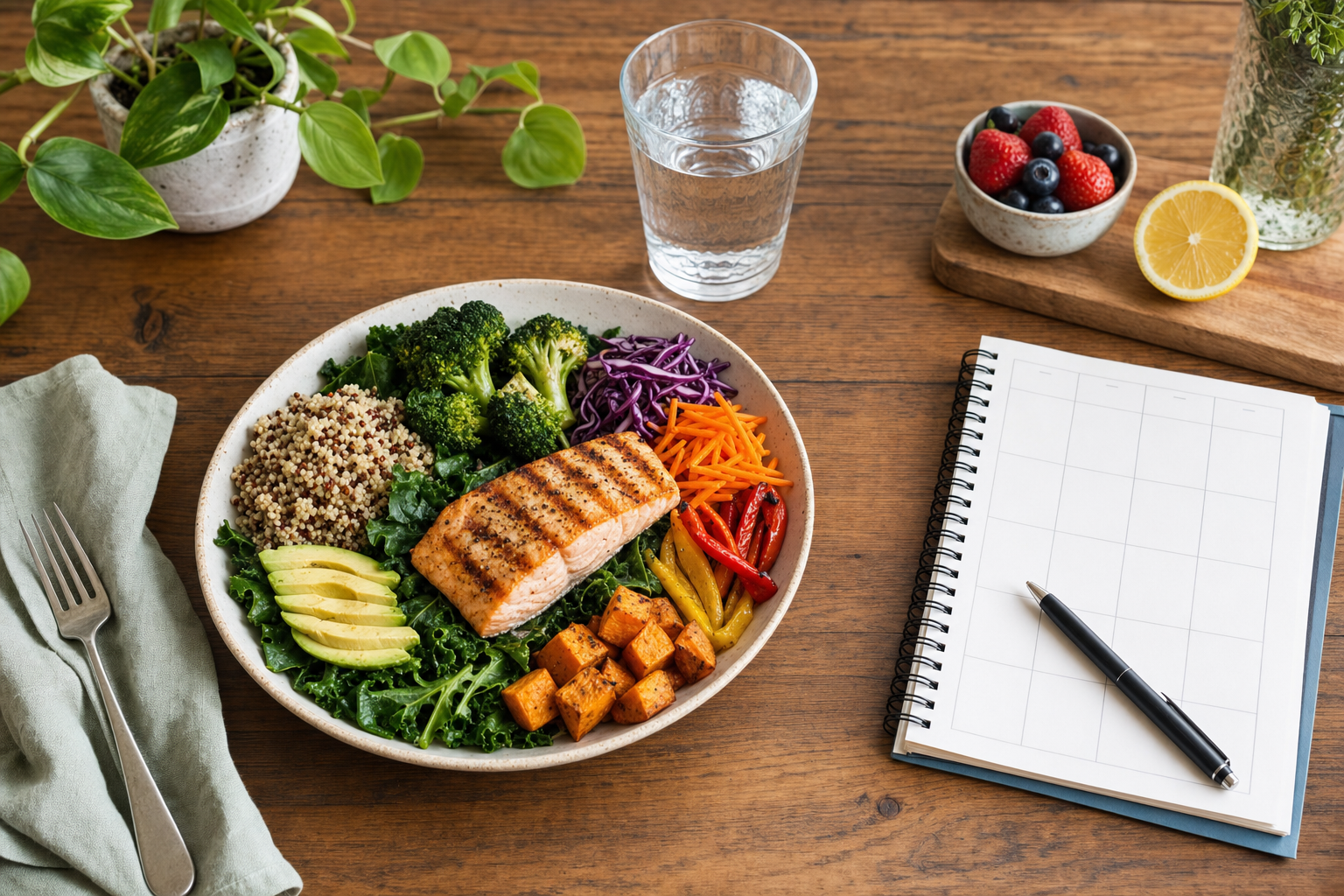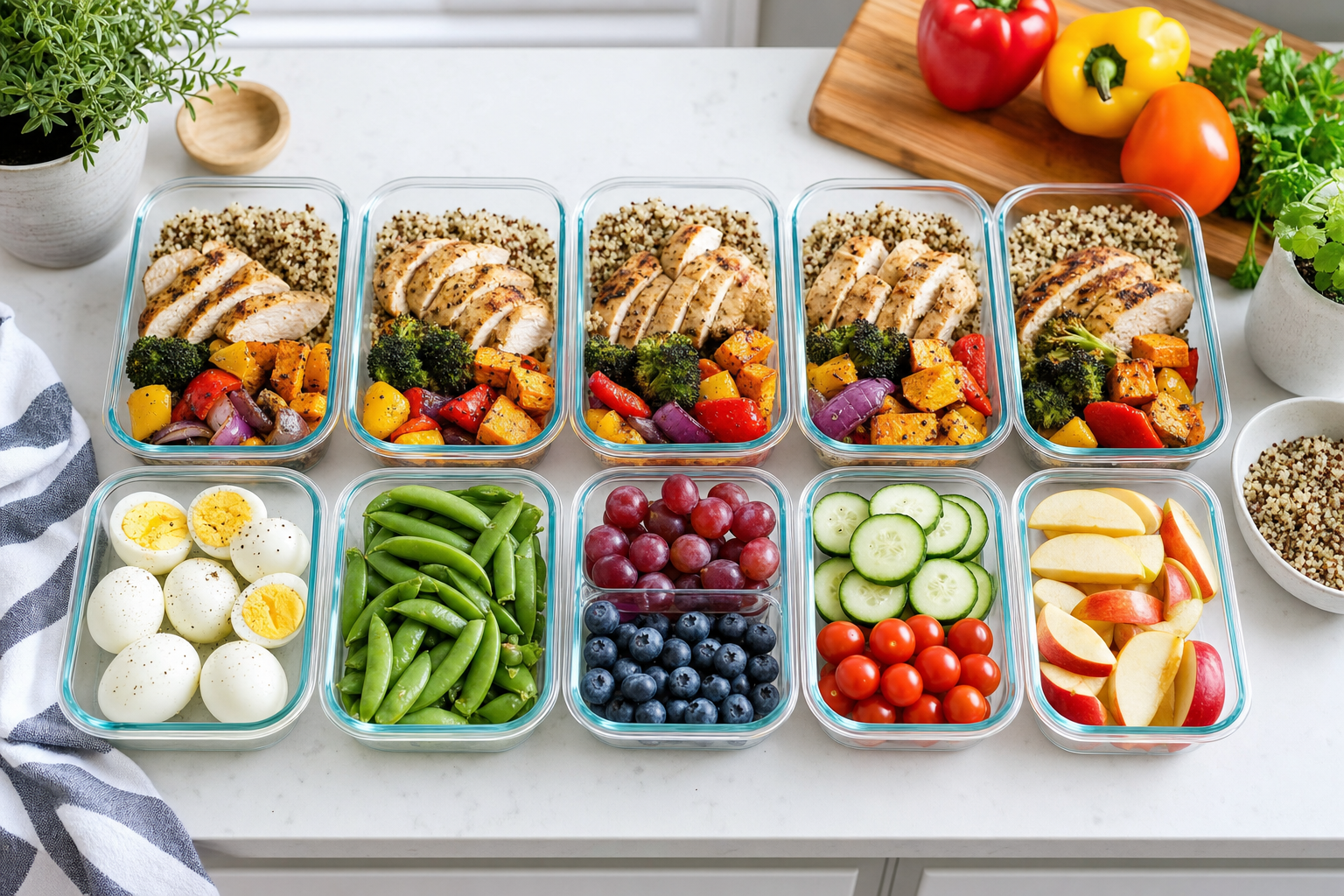
Fresh Start 30 vs Whole30: both are 30-day whole-food programs, but they differ in philosophy, structure, and who they suit. Here is the comparison.

Fresh Start 30 vs Whole30: Which 30-Day Program Is Right for You?
Both programs last 30 days. Both focus on whole foods. Both promise to reset your relationship with food.
But they’re fundamentally different in philosophy, structure, and who they work best for.
Here’s an honest comparison to help you choose the right one.
The Core Difference
Whole30: Elimination protocol. Remove specific food groups for 30 days, then reintroduce to identify sensitivities.
Fresh Start 30: Metabolic reset. Establish consistent meal timing and structure to optimize hormones and build sustainable habits.
In simpler terms:
Whole30 answers: “What foods am I sensitive to?”
Fresh Start 30 answers: “How do I build habits that last?”
Both are valuable. They just solve different problems.
Philosophy & Approach
Whole30
Core philosophy: Food is medicine. Many health issues stem from inflammatory foods. Remove them completely for 30 days to give your body a clean slate.
What you eliminate:
- Sugar (all forms, including natural sweeteners)
- Alcohol
- Grains (all types)
- Legumes (beans, lentils, peanuts, soy)
- Dairy
- Processed foods and additives
- No stepping on the scale for 30 days
The goal: Identify hidden food sensitivities and break psychological food dependencies.
Reintroduction phase: After 30 days, slowly add back eliminated foods one at a time to see how your body responds.
Learn more: Official Whole30 Rules
Fresh Start 30
Core philosophy: Your body doesn’t need elimination — it needs consistency. Hormonal dysfunction after 30 comes from erratic eating patterns, not specific foods.
What you change:
- Meal timing (same windows daily)
- Meal structure (protein-first eating)
- Inflammatory food reduction (seed oils, refined sugar)
- Daily movement (consistent walking)
- Sleep optimization
The goal: Reset metabolism, optimize hormones naturally, and build habits that continue beyond 30 days.
No reintroduction: Because you’re not eliminating food groups, there’s nothing to add back. You transition to 80/20 maintenance.
Food Rules Comparison
| Category | Whole30 | Fresh Start 30 |
|---|---|---|
| Grains | Eliminated | Allowed (complex carbs prioritized) |
| Legumes | Eliminated | Allowed |
| Dairy | Eliminated | Optional elimination (test if needed) |
| Sugar | Completely eliminated | Refined sugar eliminated, natural sources allowed |
| Alcohol | Eliminated | Eliminated during reset, optional after |
| Processed foods | Eliminated | Eliminated |
| Meal timing | Not specified | Structured (4 meals, consistent times) |
| Protein focus | Encouraged | Required (25-35g per meal) |
| Tracking | No scale for 30 days | Weekly tracking encouraged |
Who Each Program Is Best For
Choose Whole30 If:
- You suspect food sensitivities but don’t know which foods
- You have chronic inflammation, gut issues, or autoimmune symptoms
- You have psychological dependencies on specific foods (sugar, bread, cheese)
- You’re willing to eliminate major food groups for 30 days
- You want a diagnostic tool, not a long-term lifestyle
- You don’t mind strict binary rules (compliant vs not compliant)
Whole30 is a diagnostic protocol. It’s designed to give you information about how specific foods affect your body.
Official resource: Whole30 Program Rules
Choose Fresh Start 30 If:
- You’re over 30 and traditional diets have stopped working
- You want to reset metabolism and optimize hormones naturally
- You need consistent energy and want to eliminate cravings
- You want a system that builds sustainable long-term habits
- You prefer structure over restriction
- You’re focused on metabolic health, not just weight loss
- You want something that continues working beyond 30 days
Fresh Start 30 is a habit-building system. It’s designed to create routines you’ll maintain for months and years.
Difficulty Level
Whole30: High Difficulty
Why it’s hard:
- Eliminates entire food groups (major lifestyle disruption)
- Strict compliance required (one slip = restart)
- Dining out is extremely challenging
- Social situations are difficult to navigate
- Requires extensive meal planning and prep
- Can feel restrictive and isolating
Psychological challenge: The “all or nothing” mindset can trigger perfectionism or create a binge-restrict cycle after day 30.
Research perspective: Effects of Elimination Diets on Psychology
Fresh Start 30: Moderate Difficulty
Why it’s manageable:
- Doesn’t eliminate food groups (less restrictive)
- Focuses on timing and structure (not deprivation)
- Allows flexibility within guidelines
- Social situations are easier to navigate
- Protein-first eating reduces cravings naturally
- Built-in contingency plans for imperfect days
Psychological benefit: The structure reduces decision fatigue without feeling punishing.
Results You Can Expect
Whole30 Outcomes:
Common results:
- Identify food sensitivities
- Break sugar/carb cravings
- Reduce inflammation markers
- Improve gut health symptoms
- Weight loss (typically 8-12 lbs)
- Increased awareness of how foods affect you
Challenge: Many people struggle to maintain results after reintroduction. Without a maintenance structure, old habits return.
Research: Long-term Adherence to Elimination Diets
Fresh Start 30 Outcomes:
Common results:
- Reset metabolism (especially for those 30+)
- Optimize insulin sensitivity
- Stabilize energy throughout the day
- Reduce visceral belly fat
- Improve sleep quality
- Build automatic habits that continue beyond 30 days
Advantage: The 80/20 maintenance protocol makes it easier to sustain results long-term.
Cost Comparison
Whole30:
- Book: ~$15-30
- Meal prep: Potentially higher (specialty compliant foods)
- Eating out: Difficult/expensive (limited options)
- Total program cost: Low (book + groceries)
Get started: Whole30 Official Downloads
Fresh Start 30:
- Book: $25 (Amazon)
- 30-Day Meal Plan: $97 (optional, includes recipes + shopping lists)
- 6-Week Course: $297 (optional, includes coaching + community)
- Meal prep: Normal grocery budget (whole foods, no specialty items)
- Total program cost: Free (book) to $297 (full course)
Both are affordable compared to meal delivery services or personal trainers.
Can You Do Both?
Yes — but not simultaneously.
Recommended sequence:
Option 1: Start with Fresh Start 30
Build the timing structure and habit foundation first. If you still suspect food sensitivities after 60-90 days, add a Whole30 elimination protocol.
Option 2: Start with Whole30
Identify your trigger foods first. Then use Fresh Start 30 to build sustainable structure and maintenance habits.
Don’t do both at once. Whole30 is already restrictive. Adding meal timing structure on top creates unnecessary complexity.
Which One Do We Recommend?
It depends on your primary goal.
Choose Whole30 if your goal is:
Diagnostic — You need to identify what foods are causing problems
Choose Fresh Start 30 if your goal is:
Habit Formation — You need a sustainable system for long-term metabolic health
For most people over 30: Fresh Start 30 is the better starting point because metabolic dysfunction comes from inconsistent eating patterns, not specific food sensitivities.
You can always do a Whole30 elimination later if needed. But starting with structure gives you a foundation that makes any future protocol easier to follow.
Research support: Metabolic Changes After Age 30
Real-World Experiences
Whole30 → Fresh Start 30 Path
“I did Whole30 and it worked for 30 days. I lost 12 pounds and felt great. But within 6 weeks of finishing, I was back where I started. I didn’t know how to maintain without the strict rules.
Then I found Fresh Start 30. It gave me the structure I was missing. Now I use Whole30 as a quarterly reset and Fresh Start 30 as my daily system.” — Sarah, 42
Read more: Fresh Start 30 Success Stories
Fresh Start 30 → Whole30 Path
“I started with Fresh Start 30 to build consistent habits. After 90 days, I was still having digestive issues. I did a Whole30 and discovered I’m sensitive to dairy. Now I follow Fresh Start 30 structure but eliminate dairy. Best of both worlds.” — Marcus, 38
The Bottom Line
Whole30 is a diagnostic tool. Use it when you need to identify food sensitivities or break psychological food dependencies.
Fresh Start 30 is a habit-building system. Use it when you need to reset your metabolism, optimize hormones, and create sustainable long-term structure.
Not sure which you need?
Ask yourself:
- Do I have chronic symptoms that might be food-related? → Try Whole30
- Have traditional diets stopped working? → Try Fresh Start 30
- Do I need to break sugar addiction? → Try Whole30
- Do I struggle with consistency and decision fatigue? → Try Fresh Start 30
Or simply: Start with Fresh Start 30. It’s less restrictive, easier to maintain, and builds a foundation that makes any future protocol easier.
Ready to Start?
If Fresh Start 30 sounds like the right fit, here’s how to begin:
Learn More About Fresh Start 30
Understand the complete system
Get the Book
Read the philosophy and framework
Different roads. Same direction.


Build Your Next Healthy Habit
Compare FreshStart30 plans for meal planning, daily routines and member resources. Choose the support that fits your needs.

David Knox Vale
David Knox Vale created FreshStart30 to share practical meal planning, walking and daily routines. He reports losing 48 pounds over three months. This is his personal account, not an independently verified program result or a promise of what others will achieve. FreshStart30 provides general wellness education, not medical treatment.