Struggling with menopause weight gain after 50? Learn why extreme dieting backfires, what actually works for hormone balance and metabolism, and how the FreshStart30 framework supports sustainable results.

Weight Management After Menopause: Meals, Movement and Support
You can organize meals without logging every calorie. That does not mean calories stop mattering, or that a 30-day program can reset estrogen. Start with practical changes you can sustain and get medical help for symptoms that affect daily life.
Separate weight goals from symptom treatment
Menopause can coincide with changes in sleep, daily routines and body composition. No single explanation fits everyone. Avoid treating every change in weight or energy as proof of high cortisol, insulin resistance or a hormone imbalance.
The NHS menopause guidance describes balanced eating, regular activity, rest and support as useful parts of looking after health during this transition. It also advises talking to a doctor before herbal supplements or complementary medicines. Those measures do not establish that a commercial meal plan treats menopause.
Persistent or troublesome symptoms deserve a healthcare discussion. Ask about appropriate treatment and support rather than waiting to finish a diet. FreshStart30 does not provide HRT, diagnosis or a menopause-specific medical diet.
Make meals easier to repeat
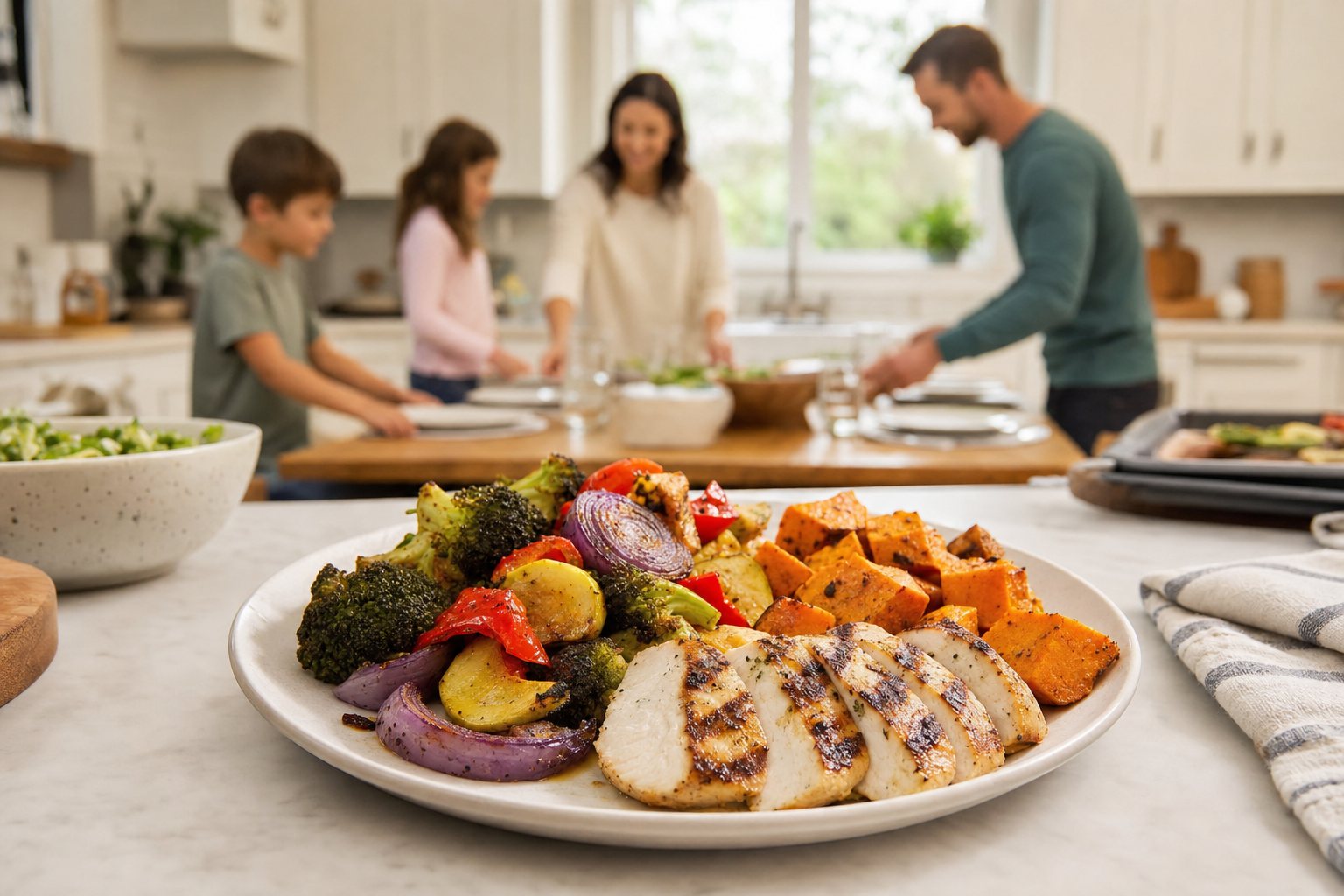
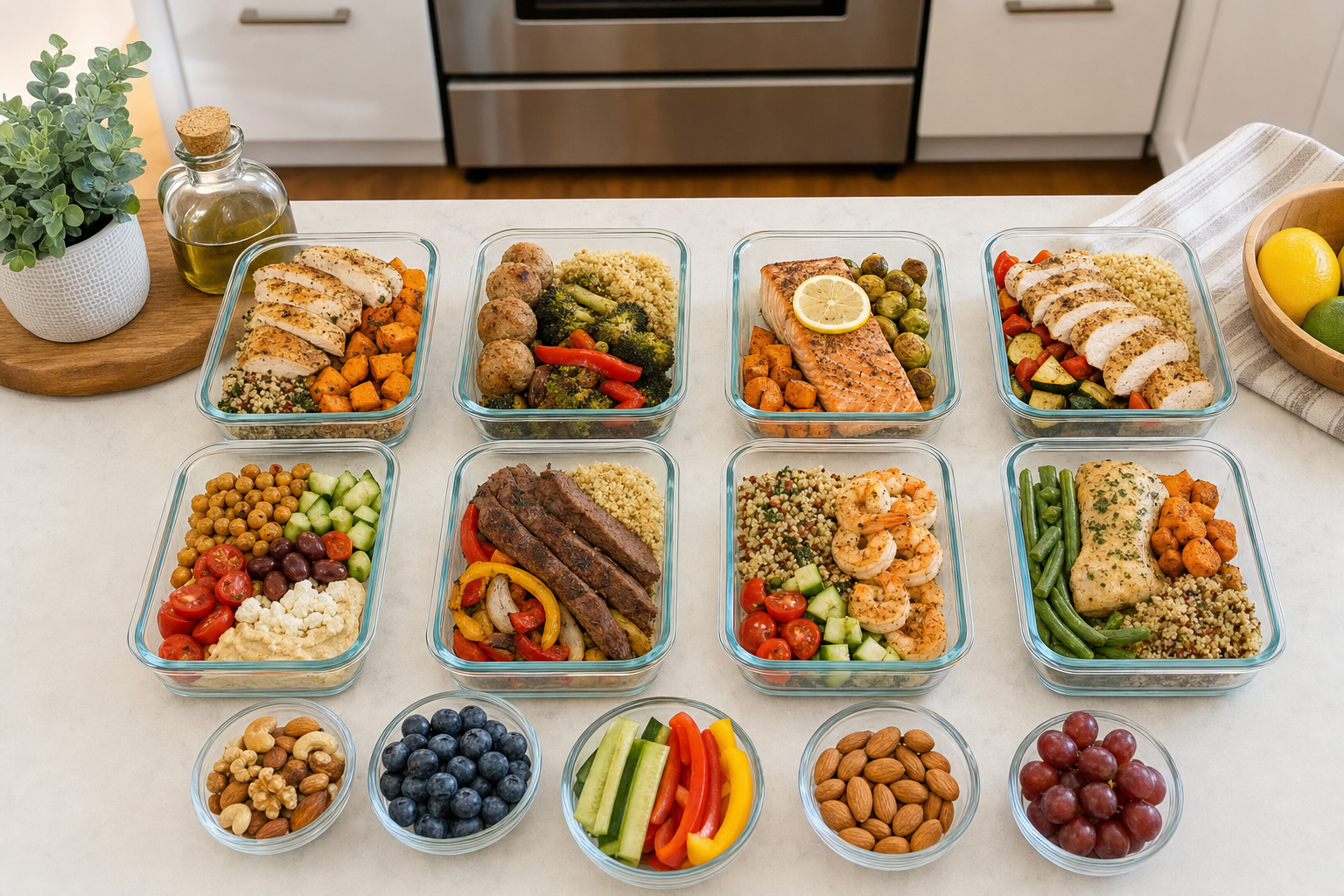
The useful part of a plan is having an answer to “what will I eat?” before the busy part of the day. Start with familiar foods and a small shopping list. You do not need a separate elaborate menu from everyone else at home.
- Breakfast: Eggs with vegetables and toast, or yogurt with oats and fruit.
- Lunch: Chicken, beans or tofu with vegetables and a grain you enjoy.
- Dinner: Fish or a suitable plant protein, vegetables and potatoes, rice or another preferred side.
- Preparation: Cook a component ahead, use leftovers safely and keep a convenient backup meal.
These are examples, not a prescribed intake. Choose portions and substitutions that suit your needs. If you have a condition requiring dietary restrictions, ask your dietitian or clinician how to adapt a general plan. This article does not assign a universal protein target or promise a particular blood-sugar response.
Food quality and portion size both matter. Eliminating calorie counting does not eliminate energy balance. A routine that repeatedly leaves you hungry, exhausted or preoccupied with food needs reassessment, not a stronger promise about “metabolic support.”
Make room for strength and everyday activity
The CDC’s general adult guidance includes moderate activity and strength work. Choose a suitable starting point and increase gradually; an individualized plan may be needed for joint, bone or other health concerns.
You can schedule a walk, try an appropriate resistance-band routine or learn technique with qualified support. Do not judge a session solely by calories burned or expect an exercise to remove fat from one chosen area.
Use the next month as a planning period
- Week 1: Select several repeatable meals, identify two realistic preparation times and note what disrupts sleep.
- Week 2: Adjust the shopping list and activity calendar to your actual schedule.
- Week 3: Keep what is working. If symptoms remain disruptive, discuss them with your healthcare team.
- Week 4: Review convenience, enjoyment and consistency. Decide what to carry forward rather than starting a more restrictive challenge.
A month is not a deadline for a body-composition change. We do not have evidence that most FreshStart30 members improve their energy, bloating or sleep within a particular number of weeks.
What FreshStart30 provides
FreshStart30 organizes meals and routines. It does not diagnose hormone problems, prescribe treatment or guarantee weight loss. The free tier offers starter resources. Premium is $97 once for meal-planning resources; Elite is $297 once and Complete is $397 once, with the six-week course included in those two higher tiers. The book is a separate purchase. Check the current plan comparison for the full list of inclusions.
Existing members should check their resources before upgrading. The Advanced Protocols hub explains the general wellness tracks and protected guides. David Knox Vale’s reported 48-pound loss in three months is a personal account, not evidence that this program changes testosterone, treats menopause or produces the same result for others.
Common questions
Is this a program designed to treat menopause?
No. The women’s wellness guide and meal-planning resources are general education, not evidence of a clinically tested menopause intervention.
Can I skip calorie tracking?
You may prefer menus and portions to detailed logging. That is a planning preference; it does not guarantee weight loss without changes to intake or activity.
Will buying Elite improve my hormones more than Premium?
No such comparison is established. The tiers differ in included resources, not proven medical effectiveness.
What if weight is not my main concern?
Discuss your priorities with your clinician. A program purchase is optional, and symptom care should not depend on buying one.
Editorial update: Removed unsupported hormone-reset and comparative effectiveness claims, fixed result timelines and blanket testing or nutrition assumptions. Preserved practical meal and monthly planning guidance. Independent sources have not endorsed or medically reviewed FreshStart30.