A practical seven-day exercise for planning meals, movement and rest during a busy week. No hormone-treatment promises or fixed result deadlines.

A Seven-Day Routine for Stress, Meals and Rest After 30
When a busy week leaves you eating whatever is available and sleeping poorly, a simpler routine can help you regain some structure. You do not need to label the problem “cortisol weight gain” before making useful changes.
Before you start: separate symptoms from assumptions
Fatigue, cravings and a change in your waistline do not identify their own cause. Weight can be affected by eating patterns, activity, sleep, medicines and health conditions, among other factors. See NIDDK’s explanation of factors affecting weight and health.
If symptoms are persistent, unexplained or disruptive, talk with a clinician. Do not postpone appropriate care while waiting for a wellness routine to work. For the distinction between everyday stress and cortisol disorders, read our cortisol and weight guide.
Day 1: choose one problem to make smaller
Write down the part of the day that regularly falls apart. Is lunch difficult because you cannot leave work? Does a late meeting leave you without dinner? Are evening commitments cutting into rest?
Pick one issue. A useful first step could be packing lunch before bed or putting an easy dinner on the grocery list. Avoid trying to change your entire schedule at once.
Day 2: build a meal you can repeat
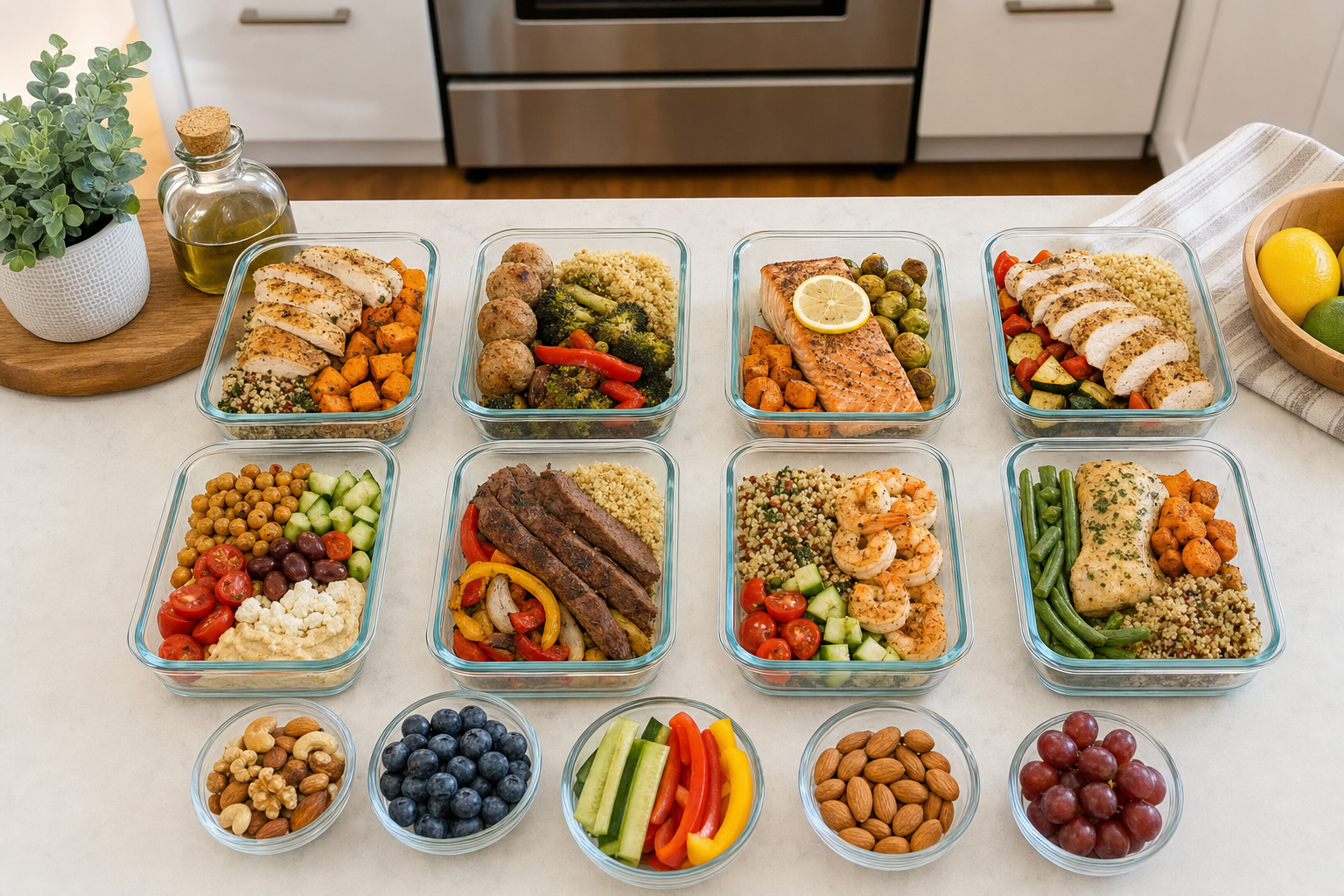
Choose ingredients you enjoy and can obtain easily. For example, combine rice, beans or chicken, and vegetables. Keep frozen vegetables or canned beans available if they make preparation easier.
Adjust portions and substitutions to your preferences, allergies and any advice from your healthcare team. There is no special breakfast deadline in this exercise, and the meal is not intended to alter cortisol levels.
Day 3: prepare a backup
A backup meal helps when the original plan no longer fits. Soup and toast, eggs and vegetables, or leftovers can all be practical choices. Decide what yours will be before the busy evening arrives.
If you want more structure, use a short shopping list rather than buying ingredients for seven unfamiliar recipes. Repeating something you like is a valid plan.
Day 4: protect a period of rest
Notice what interrupts your evening. Choose one adjustment: finish a task earlier, put tomorrow’s essentials together or set aside time for quiet reading. Keep the change realistic for your work and family responsibilities.
This is not a test of perfect sleep. If sleep difficulties continue or affect daily functioning, discuss them with a healthcare professional rather than treating them as evidence of a cortisol problem.
Day 5: choose movement that fits today
Plan an activity that suits your abilities and current circumstances. It might be walking, a familiar strength session or another activity you enjoy. Adapt the plan to medical advice and how you feel.
You do not need to compensate for a missed workout with an exhausting session. The purpose here is to find an activity you can fit into your routine, not to prescribe training that changes hormone levels.
Day 6: make space for support
Try a relaxing activity, ask someone to share a task or make time for a conversation. NCCIH discusses stress and relaxation approaches. Their usefulness for stress management is not proof that a commercial program treats a hormone disorder.
If stress is becoming difficult to manage, seek qualified support. A meal plan cannot replace mental-health care.
Day 7: review what was practical
- Which meal was easiest to prepare?
- Did the backup help when plans changed?
- Which activity fit your schedule?
- What made rest easier, and what still needs attention?
Keep one or two useful changes for next week. You do not need a lower scale reading to learn from this exercise. Seven days cannot establish that cortisol has changed, and no particular week marks a universal habit-formation deadline.
What FreshStart30 adds
FreshStart30 offers meal-planning and habit resources for adults who want more structure. It does not provide cortisol testing, individualized medical treatment or a guaranteed result timeline.
Current plans are Free ($0), Premium ($97), Elite ($297) and Complete ($397). Paid plans have one-time payments with lifetime access. Premium includes meal-planning resources; Elite and Complete also include the six-week course. Review the plan comparison and refund policy to choose what you need.
Already a member? Sign in to use your resources, or contact support for account help.
Common questions
Will this lower my cortisol?
This routine does not measure cortisol or establish an effect on hormone levels. It is a way to organize everyday habits.
What if I miss a day?
Use the next useful step when you can. You do not need to repeat the entire week or wait for Monday.
Do I need to buy a plan to try this?
No. The seven-day exercise above is available here. A paid membership is optional if you want the additional resources described on the plan page.
About this update
Updated September 15, 2026 to remove symptom-based diagnosis, unsupported hormone-treatment claims and result deadlines while retaining practical weekly planning. General educational information; not medical advice or a medically reviewed treatment plan. Linked organizations do not endorse FreshStart30.